
Author: Tristan Hotham
-
Market towns that failed: what became of the medieval markets of England and Wales?
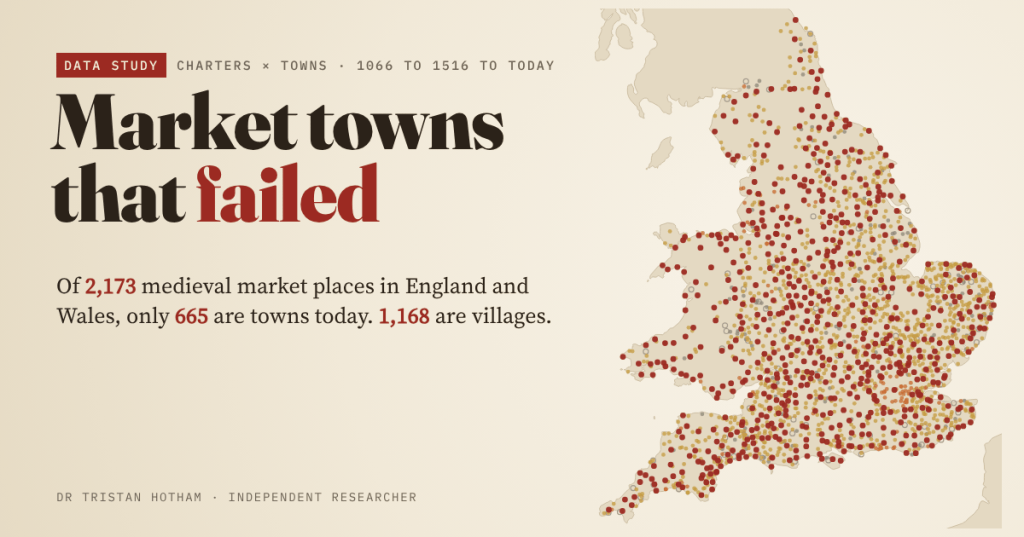
Medieval kings licensed markets in their thousands, each a bet that a village would become a town. I followed all 2,173 market places in England and Wales to today: 665 are towns, 1,168 are villages, and a few are fields or sea.
-
Britain’s last line of defence: the pillboxes and stop lines of 1940
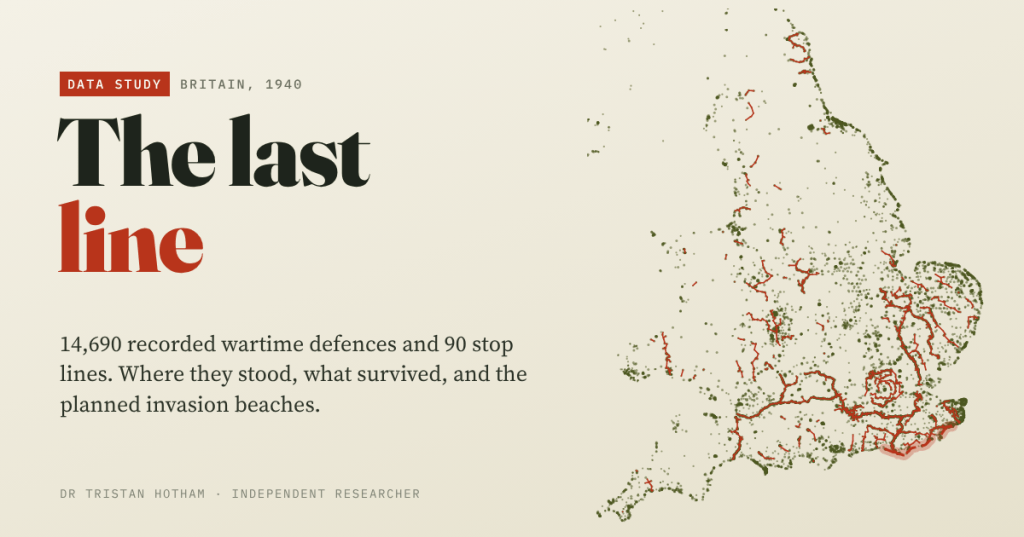
I mapped 14,690 wartime defences recorded by Defence of Britain volunteers. The planned German landing beaches had 2.3 times the average density of defence, and 71% of sites with a known condition were still standing.
-
Did Beeching Kill Your Town?
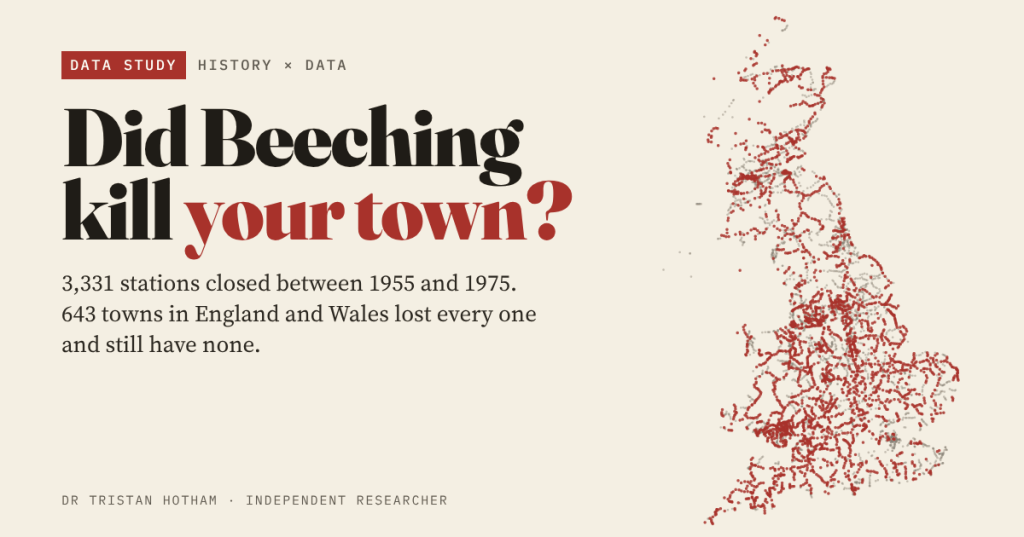
3,331 railway stations closed in Britain between 1955 and 1975, and 643 towns in England and Wales lost every one. Size for size, they are a little poorer and more car-bound today, but they did not fall off a cliff.
-
From Domesday mills to modern mills
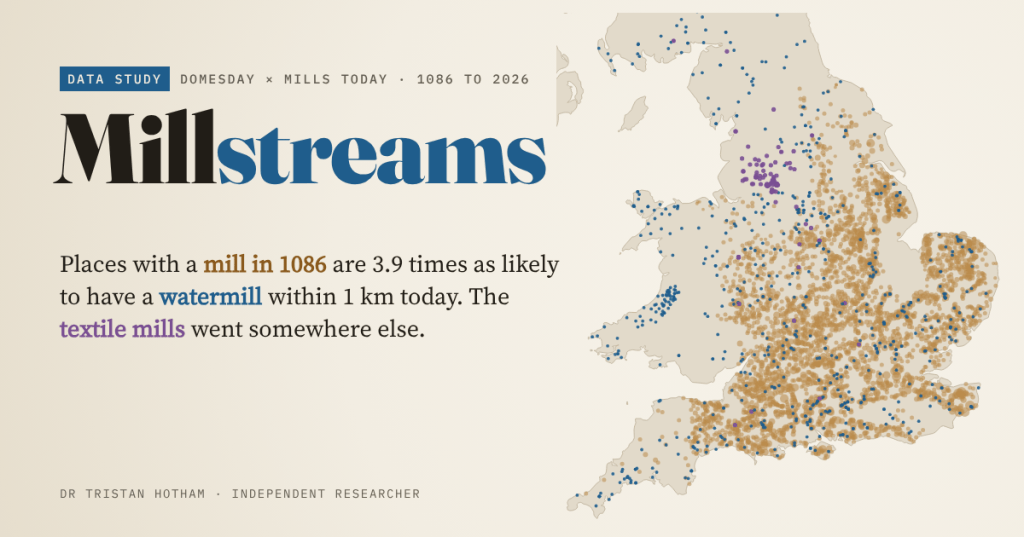
Domesday Book’s entries count 6,172 mills in 1086. Places that had one are 3.9 times as likely to have a mapped watermill within 1 km today, but no likelier to have a windmill, and the textile mills of the Industrial Revolution went somewhere else.
-
Ley lines, tested: are Britain’s ancient sites lined up more than chance allows?
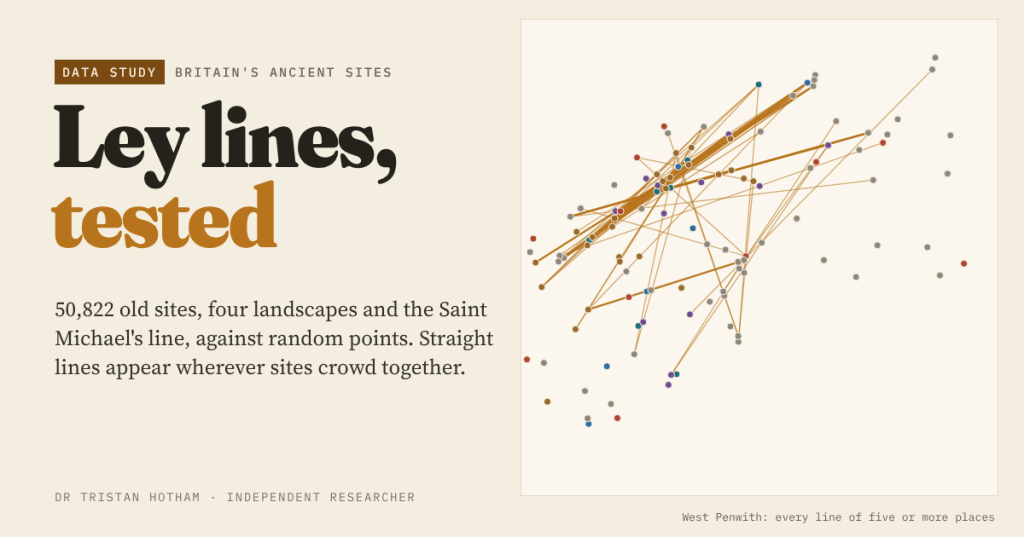
Alfred Watkins saw straight lines of old sites across Herefordshire in 1921. I mapped 50,822 churches, barrows, stones, hillforts and holy wells and compared every alignment with random points: crowding, not planning, explains the leys.

