
Category: Research papers
-
Facebook kept pace with public attention. It didn’t lead it.
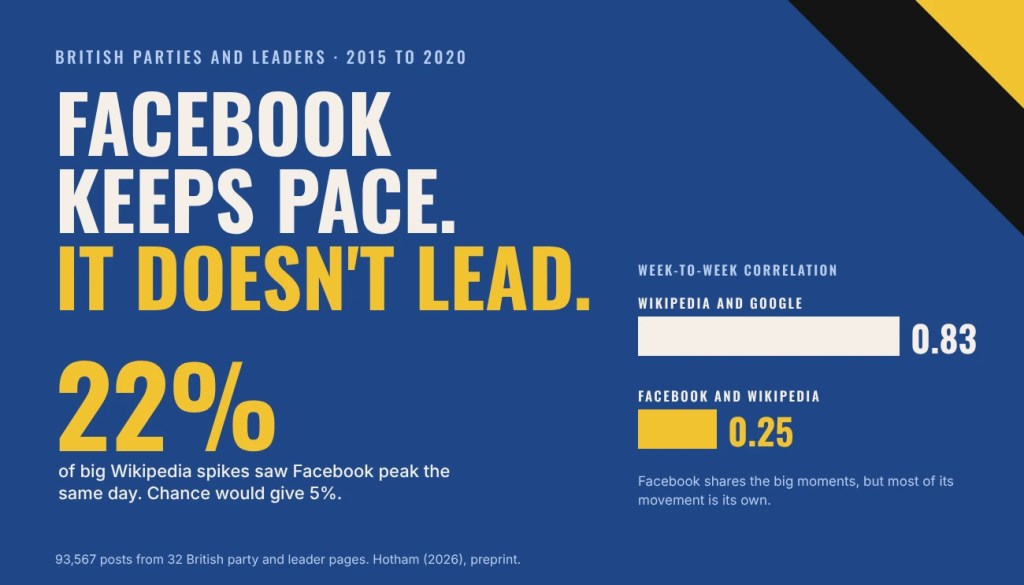
Comparing Facebook engagement for British parties and leaders with Wikipedia reading and Google searches from 2015 to 2020, the big spikes mostly came on the same day, with no reliable leader, and none of the three came close to the polls.
-
Negativity got the clicks: what earned engagement on Labour and Conservative Facebook pages
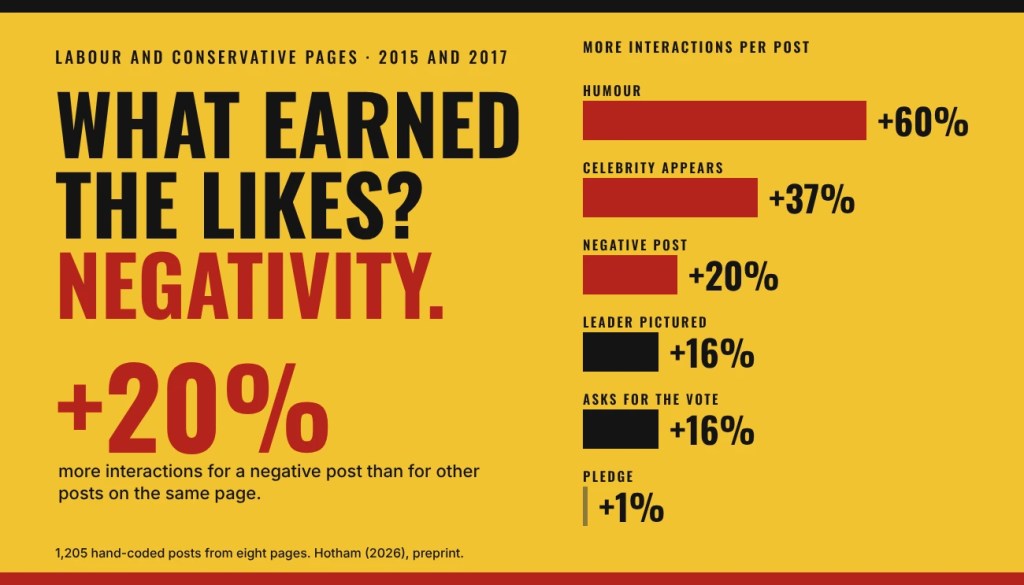
Hand-coded posts from the 2015 and 2017 election campaigns show that negative posts drew about 20% more likes, comments and shares than other posts on the same page. Pledges made no detectable difference.
-
Win power, lose the likes: what governing did to European parties on Facebook
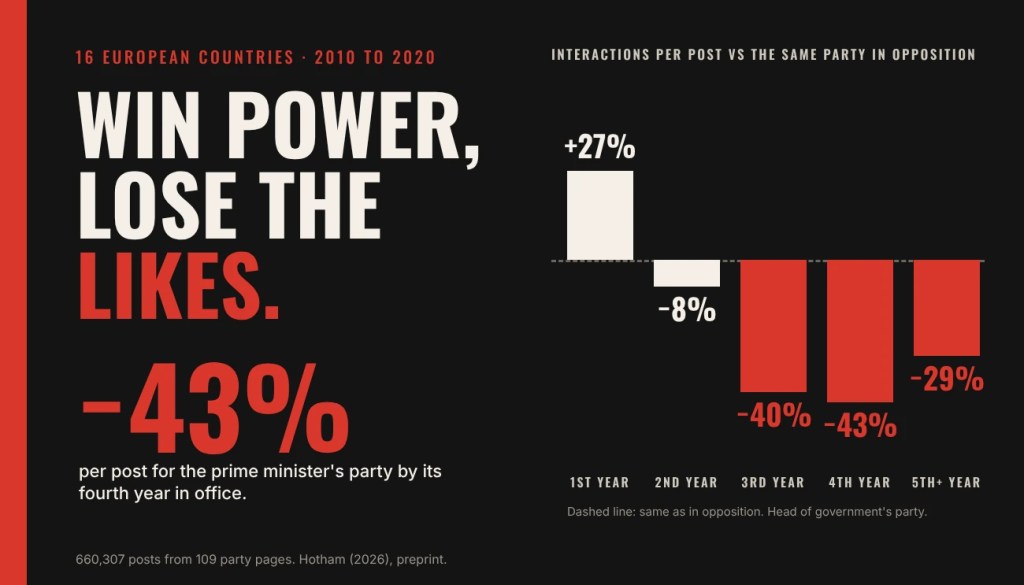
Ten years of Facebook data from 16 European countries suggest that governing costs parties attention: posts drew less once a party was in government, and leaving office did not bring it back.
-
Did Europe rally round its leaders on Facebook in the first Covid-19 wave?
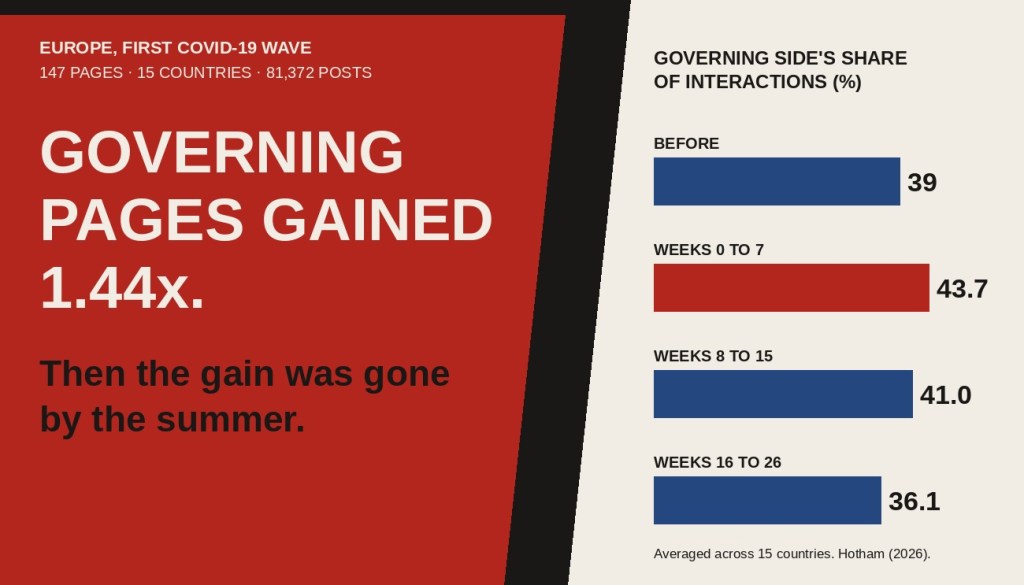
When lockdowns began across Europe in 2020, governing parties and heads of government drew more attention on Facebook, but so did the opposition. A new paper using 81,372 posts from 147 pages finds a real but modest and short-lived rally.
-
Angrier, or just more expressive?
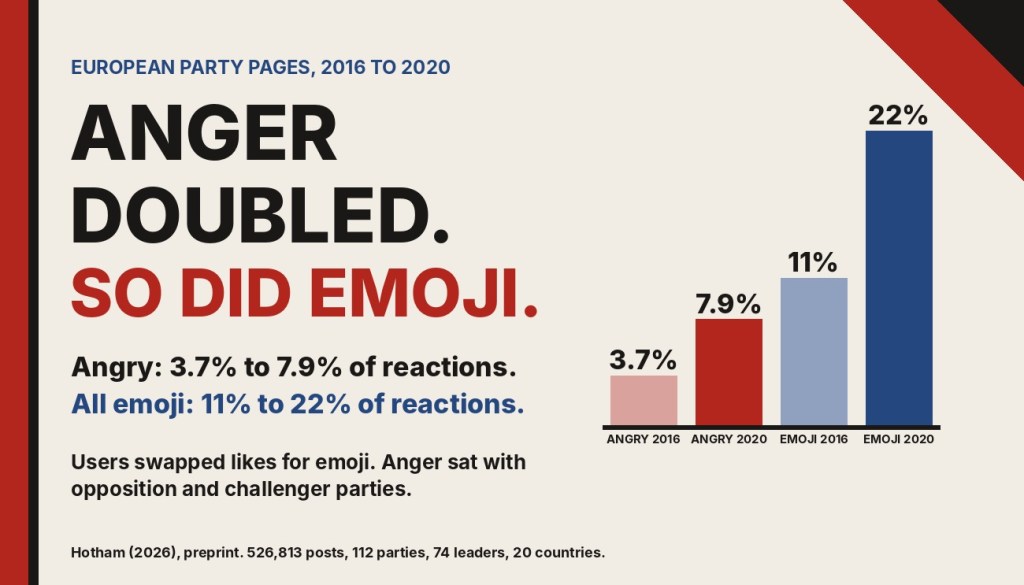
Angry reactions on European party pages roughly doubled from 2016 to 2020, but so did emoji of every kind. A new paper from my doctoral data asks where the anger really was.

