
Updated in 2026 to match how I define the term in my thesis, and to add what my later research found.
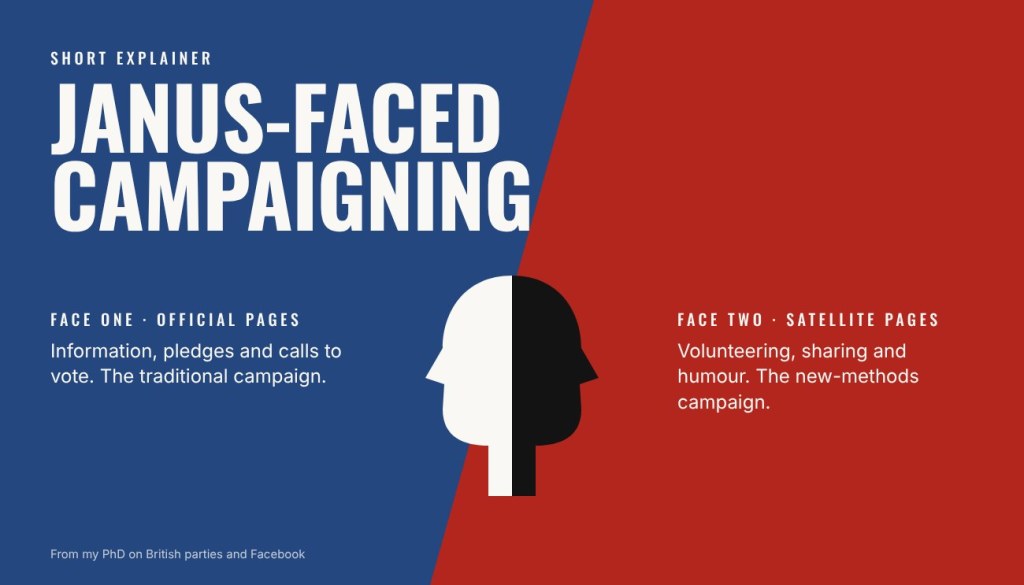
Janus-faced campaigning is when a party shows different faces to different audiences by running different pages that do different jobs.
For the fuller answer, with the evidence behind it, see What is Janus-faced campaigning? on my research site.
I coined the term in my PhD thesis, which studied how British parties used Facebook as a campaign tool from 2010 to 2018. It comes from Janus, the Roman god with two faces, one looking forward and one looking back. In a campaign, the two faces are two styles of campaigning that run side by side, often aimed at different people.
The two faces
The thesis found that the two main parties ran their Facebook campaigns in two parts.
- The traditional face. The official party and leader pages rebuilt the familiar offline campaign online: information, pledges, the slogan and calls to vote. This was the main campaign, and it played it safe.
- The new-methods face. Satellite pages, which sit close to a party but outside its formal structure, did the riskier work: asking people to volunteer and knock on doors, sharing viral and partisan content, and using humour. Momentum is the clearest British example.
The point is the division of labour. A satellite can say and do things the party cannot, without putting the party’s main campaign at risk. The party gets the best of both worlds.
What it looked like in 2017
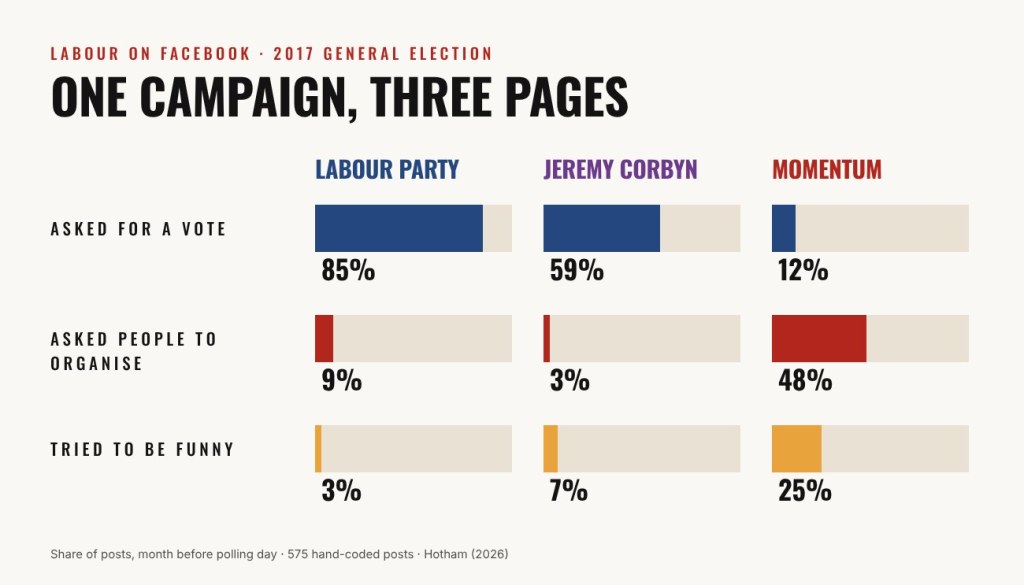
In the month before the 2017 general election, 85% of the Labour Party page’s posts asked for a vote. Momentum asked for a vote in 12% of its posts. Instead, about half of its posts asked people to organise: to help on the doorstep, volunteer or sign up to campaign. A quarter of them tried to be funny, against 3% on the party page.
When I went back to the data in 2026, I found one refinement. Jeremy Corbyn’s own page sat between the two. It was mostly like the party page, but wherever it differed, it moved towards Momentum. So in practice the two faces can look more like a sliding scale, with the leader in the middle. That is in What does a satellite campaign do?
Why social media makes it easier
Before social media, running a second campaign with a different voice meant leaflets, rallies and people on the ground. On Facebook, a page costs nothing, audiences choose which pages to follow, and a satellite page can reach millions without ever appearing on the party’s own feed. Targeted adverts add another layer, because different groups can be shown different messages without ever seeing each other’s.
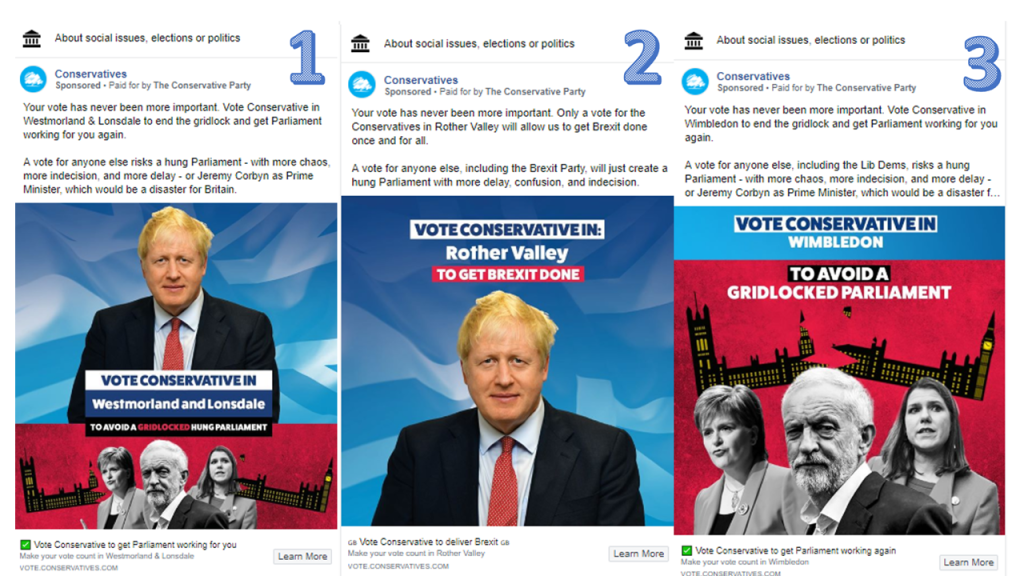
The capacity is real, but it is worth being precise about how much parties used it. When I studied every ad the main parties started in the 2019 campaign, the big parties did not write thousands of tailored messages. They wrote a few and ran them thousands of times. That is in Same message, thousands of times.
Why it matters
Janus-faced campaigning is not dishonest in itself. Parties have always spoken differently to activists and to the wider public. But it does raise three questions.
- Who sees what. Most voters only ever see one face, so they may get a very different picture of the same campaign from their neighbour.
- Who is responsible. When a satellite page goes further than the party would, it is harder to say who speaks for the campaign and who should answer for it.
- What researchers miss. If you only study a party’s official pages, you miss part of its campaign. I found the same in the 2020 US election, where an unofficial page outdrew Joe Biden’s own page.
Read more
- The thesis: how do parties use Facebook?
- Short explainer: satellite campaigning
- Janus-faced campaigning in brief, with the key figures and sources

