
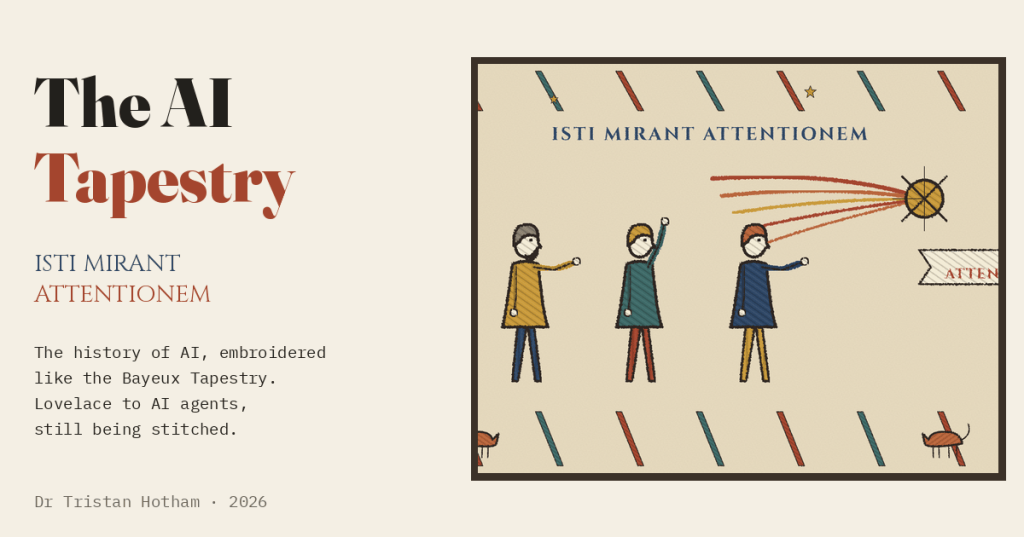
The Bayeux Tapestry tells one story as a single strip of linen: omens, feasts, boasts, a fleet, a comet, a battle, all captioned in Latin with jokes running along the borders. The history of artificial intelligence fits it suspiciously well. So I stitched it, in code: 21 scenes from Ada Lovelace to the AI agents of today, to scroll through sideways, with a sourced note behind every scene.
The real tapestry is about 70 metres long and was made within a few years of 1066. It is not neutral. It was made for the winners, it lingers on the omens that justified them, and the end is missing. Every one of those things is true of most histories of AI, which makes it a good frame for telling one: the long run-up, the overconfident feasts, the winters, the fleet, the comet, and a story that is plainly not finished.
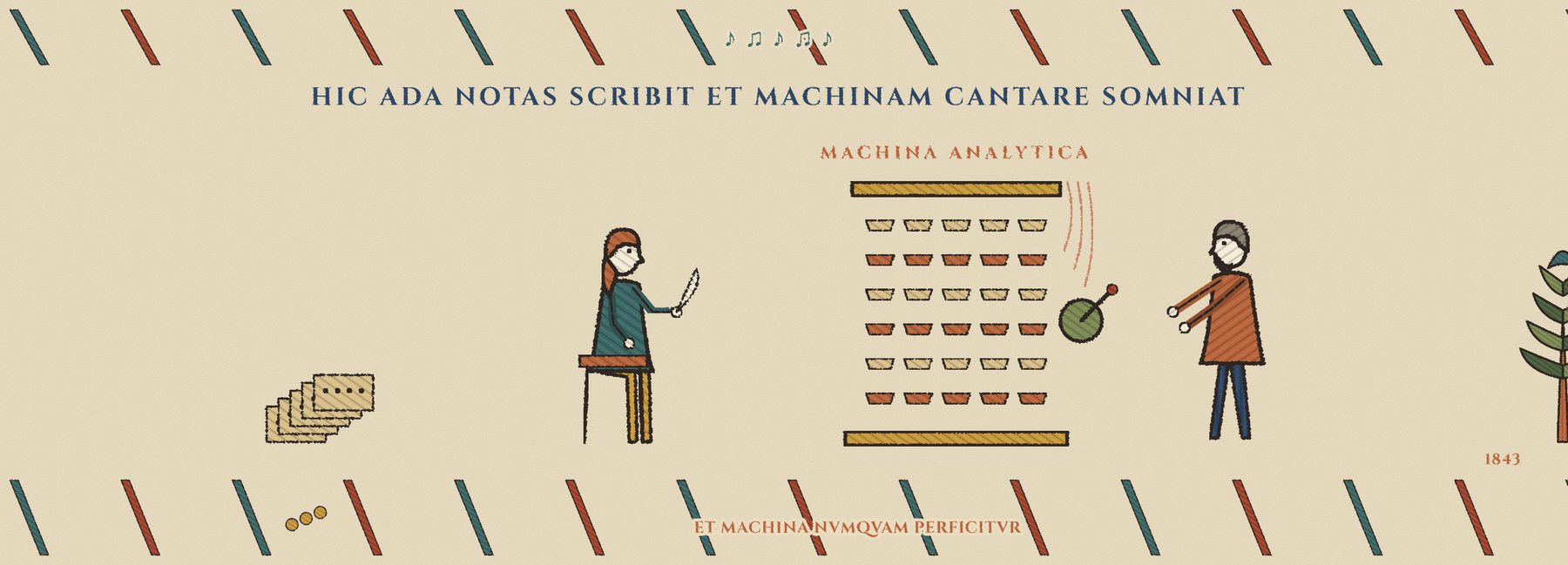
It begins with a woman and an engine that was never built
In 1843 Ada Lovelace published her notes on Charles Babbage’s Analytical Engine. Note G sets out, step by step, how the engine could compute Bernoulli numbers, and she guessed it might one day compose music. She also wrote that it could only do what we know how to order it to do, which is the first objection to machine intelligence on record. The engine was never finished, which the border notes, in Latin.
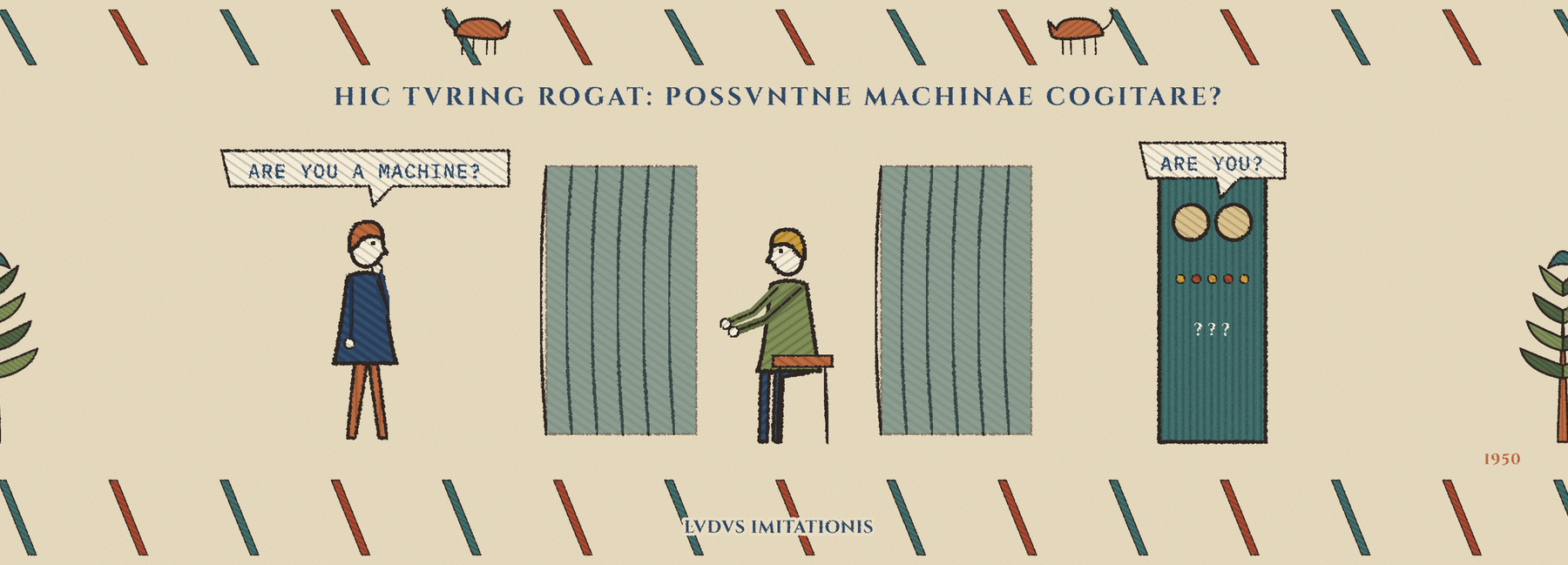
In 1950 Alan Turing replaced the question “can machines think?” with a game played through a curtain, and answered nine objections in advance, including “Lady Lovelace’s”. Six years later the founders met at Dartmouth for a “2 month, 10 man study” and hoped a summer would bring a significant advance. In the margin there is a calendar reading AESTAS, summer, and another reading MMXXVI.
Two winters
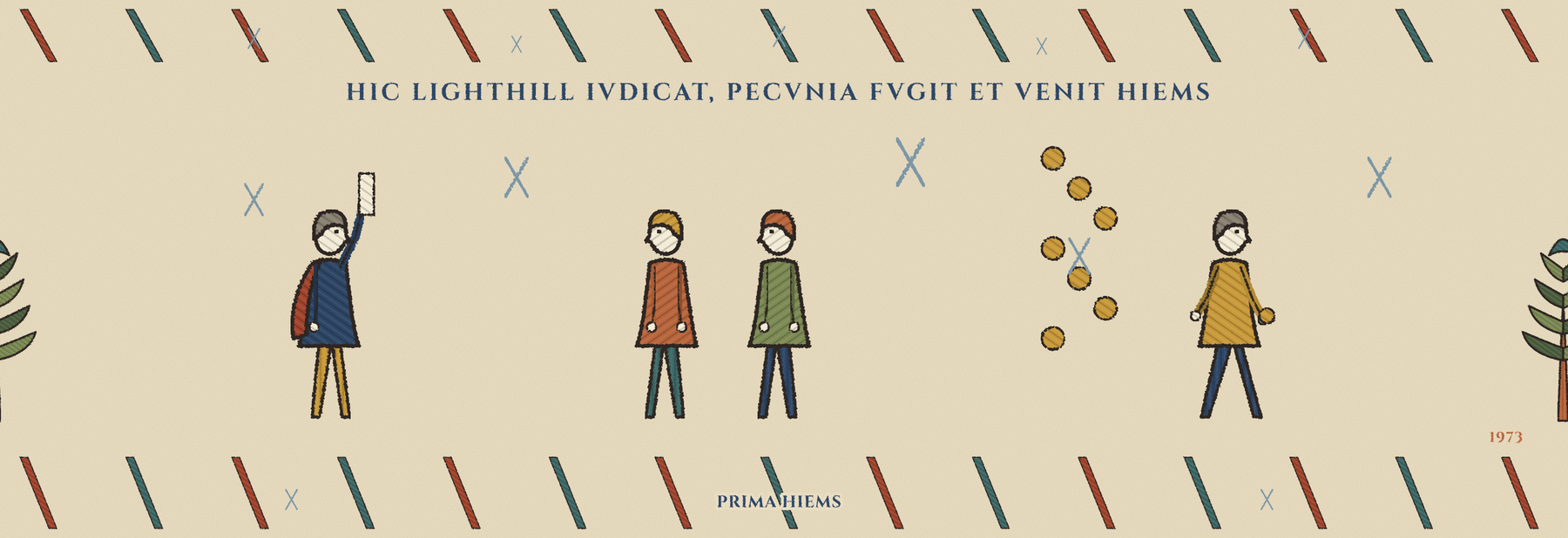
The tapestry has heralds in it, and so does AI. In 1958 the New York Times reported that the Navy expected the perceptron to “walk, talk, see, write, reproduce itself and be conscious of its existence”. It did not. By 1973 Sir James Lighthill was telling the Science Research Council that no part of the field had made the impact once promised, and most British AI research lost its funding. Here the coins fly off the cloth and the snow starts in the border. The second winter came in 1987, when the market for the machines built to run hand-written expert rules collapsed.
Kings, games and a comet
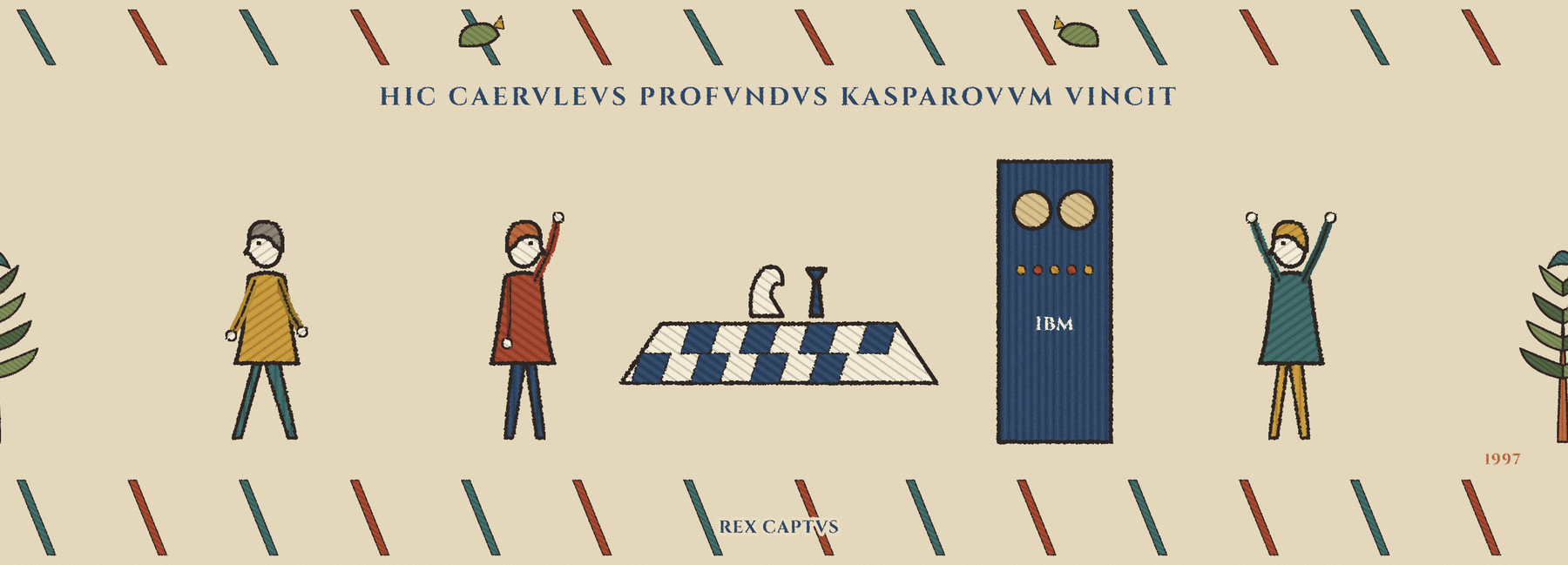
Deep Blue beat Garry Kasparov in 1997 by searching about 200 million chess positions a second. Watson won at Jeopardy! in 2011. In 2012 a neural network trained on two gaming graphics cards won the ImageNet contest, and another at Google learned by itself to spot cats. In 2016 AlphaGo played move 37, which every professional watching thought was a mistake.
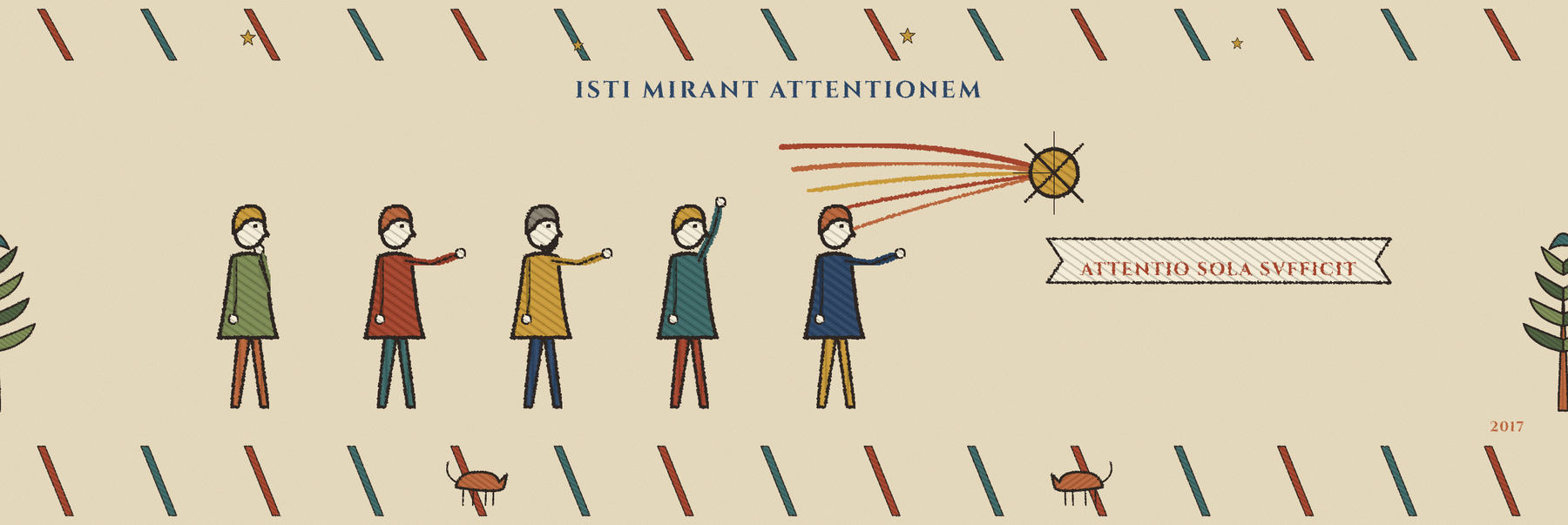
The most famous scene in the real tapestry shows people staring and pointing at a comet, captioned ISTI MIRANT STELLA: these people marvel at the star. In 2017 eight Google researchers published “Attention Is All You Need”, which introduced the transformer, the T in GPT. On this cloth they marvel at the attention.
The year everybody started talking to the machine
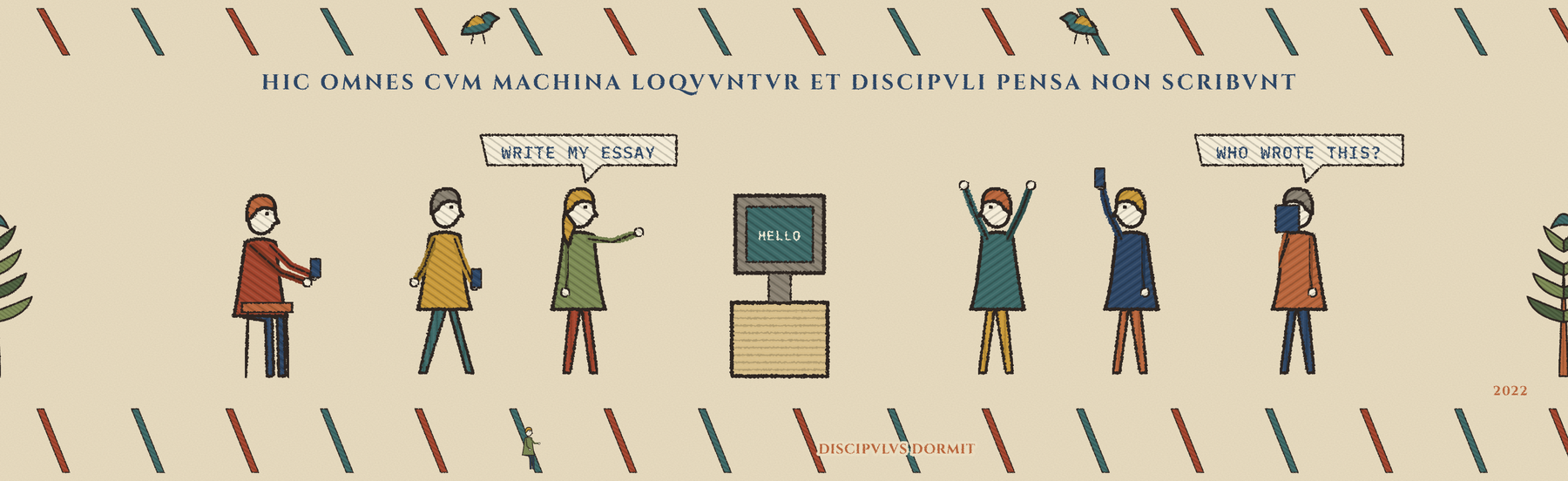
ChatGPT reached a million users in five days in 2022. The scene has people with phones, a screen saying HELLO, someone asking for an essay, a teacher asking who wrote it, and in the border a student asleep. After that come the feast at Bletchley Park, where Turing had worked, and the declaration signed there; Nobel prizes for the people behind neural networks and AlphaFold; a whale from the east, the logo of DeepSeek, whose model knocked about $590 billion off Nvidia’s value in a day; and little machines carrying out tasks on their own while people ask who checked their work.
Still being stitched
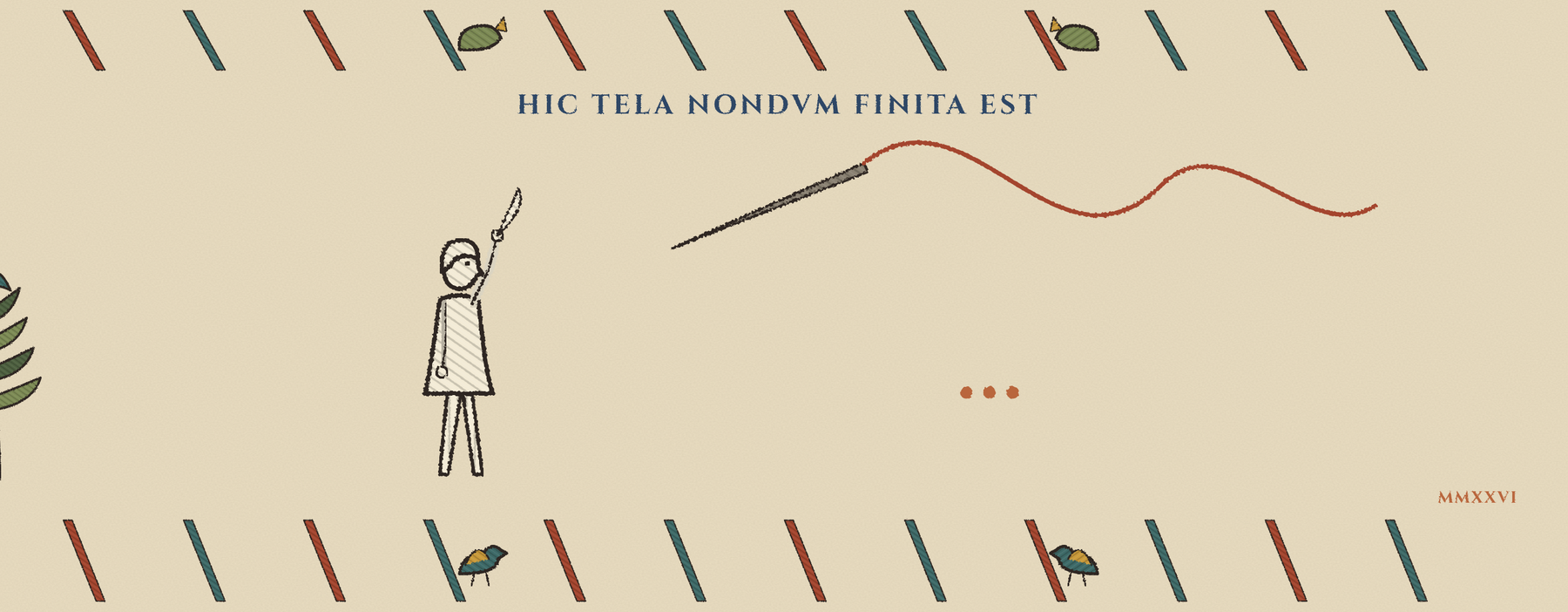
The real tapestry is missing its end. This one is unfinished on purpose: the last scene is a figure still in outline, a needle and a long red thread. The whole cloth is drawn from one list of scenes, so new chapters can be added as they happen, and I will keep adding them.
How it was made
Nothing is traced or copied from the Bayeux Tapestry. Every figure is drawn in code from a small kit of shapes in the manner of the original: oval heads, short tunics, coloured hose, stylised trees between scenes, and borders of paired beasts. The fills imitate laid-and-couched work, rows of wool held down by small stitches, and every outline is a slightly wobbly stem stitch. The colours follow the small range of natural dyes in the original: madder reds, weld yellows, woad blues and the greens made by mixing them. The Latin is the dog Latin of the original, cheerfully. Each scene’s note is written to be accurate and fair, with links to its sources, and the data and code are open. Fittingly, one of the machines on the cloth helped stitch it.
Scroll the whole tapestry at maps.tristanhotham.com/ai-tapestry. The paper, data and code are on Zenodo and GitHub.

