
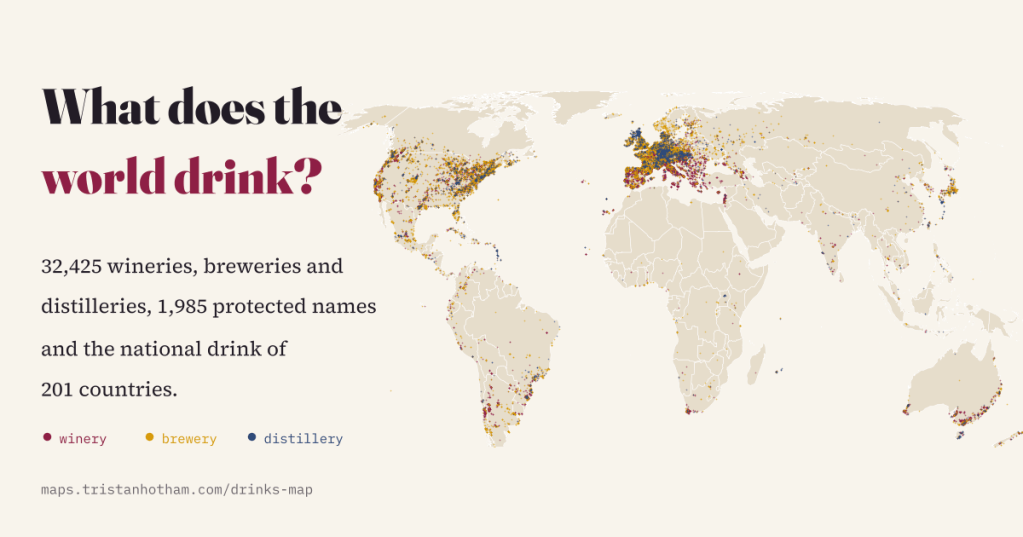
Champagne, Cognac, Rioja, Tequila: drinks are named after places more than almost anything else we buy. I tried to put every drink back where it came from, on one map, and found that the map says as much about who keeps the records as about who drinks.
After mapping what the world eats, the obvious next question was what it drinks. Wine and its appellations, beer and its styles, cider and perry, spirits of every kind, sake and the other rice drinks, and the old traditional drinks such as kvass, pulque, chicha and palm wine. Plus the brands, the people who make them, and the drink each country holds up as its own.
No single dataset covers all of that, so the map combines four open sources. Wikidata, the open database behind Wikipedia, gives 27,322 named drinks with a country. The EU’s register of protected names gives 1,985 wines, spirits, beers and ciders whose names are protected in law. OpenStreetMap’s volunteer mappers have tagged 32,425 wineries, breweries and distilleries. And two Wikipedia lists name the national drink of 201 countries and the national liquor of 90.
The national drink is often tea
Start with the pub question: what is your country’s national drink? Wikipedia’s list is a crowd’s answer, and it is more sober than you might expect. Of the 201 countries in it, 90 (45%) list a drink without alcohol first: tea in 19 countries, coffee in 16, and everything else from mate in Argentina and lassi in India to kava across the Pacific.
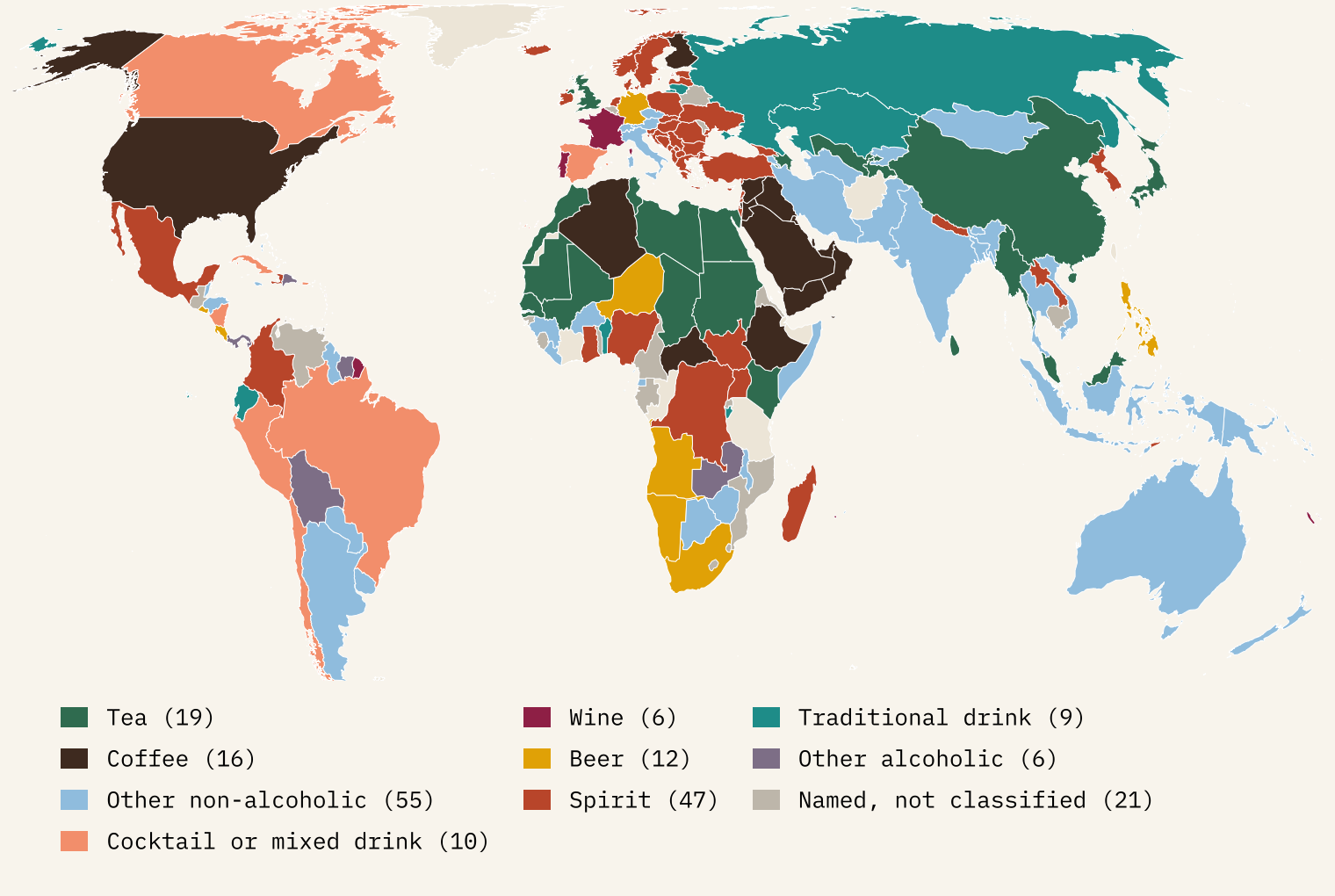
Among countries that name an alcoholic drink first, spirits of every kind lead (47 countries), brandies and fruit spirits most of all, then beer (12) and cocktails such as Brazil’s caipirinha (10). The separate list of national liquors reads like a map of distilling traditions: rakija across the Balkans, arak around the eastern Mediterranean, rum in the Caribbean, baijiu in China, soju in Korea, shochu in Japan, tequila and mezcal in Mexico, and pisco claimed by both Peru and Chile. Across both lists, the most named drink is rum (17 countries).
Wine: a continent of protected names
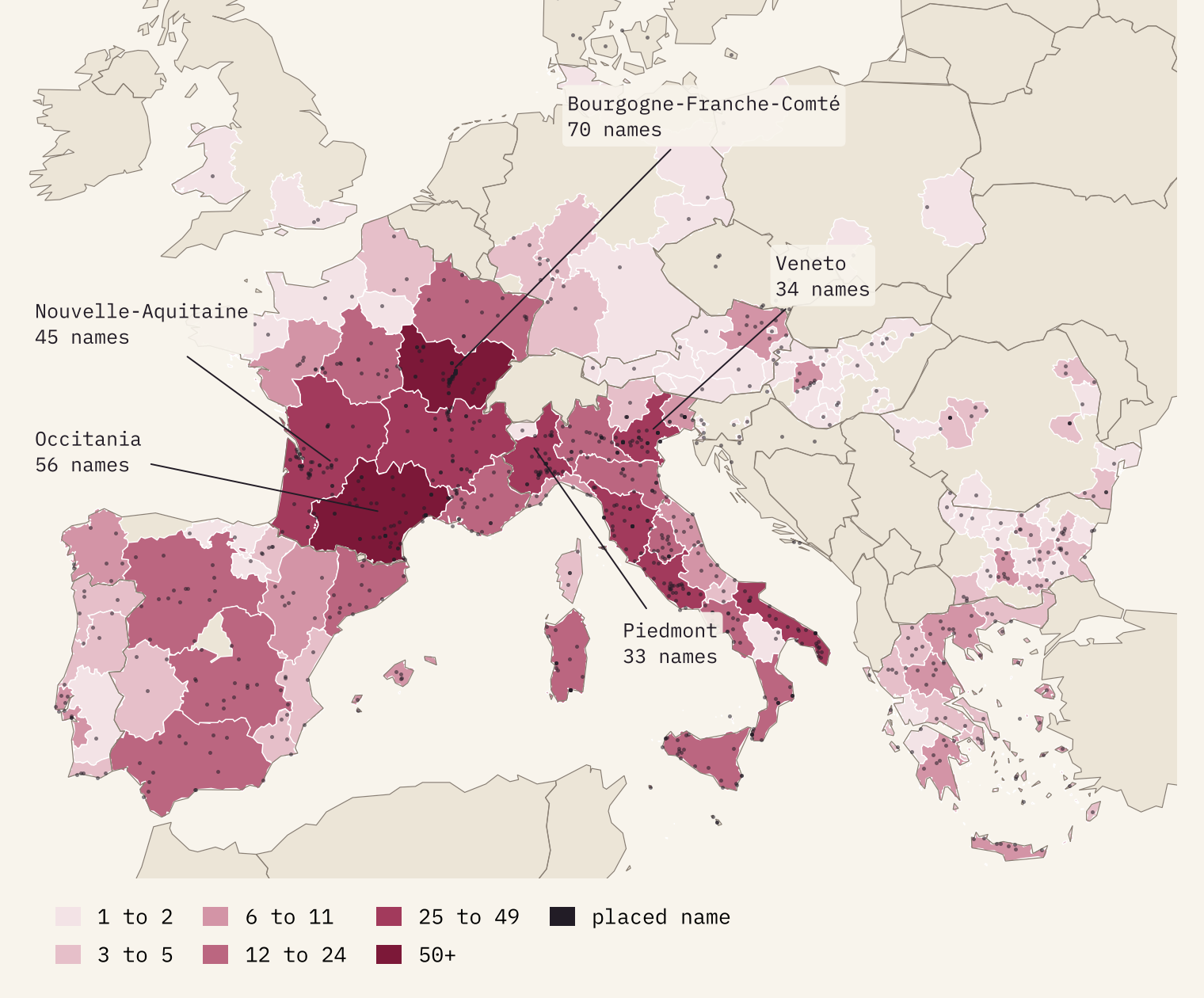
Wine is where drink and place are welded together by law. The EU register holds 1,665 protected wine names: Italy has 522, France 442, Spain 150 and Greece 147. I could put 996 of the 1,985 protected drink names on the map, through the place Wikidata links to each one or a place of the same name in the same country. The region with the most is Bourgogne-Franche-Comté (70), home of Burgundy’s village appellations.
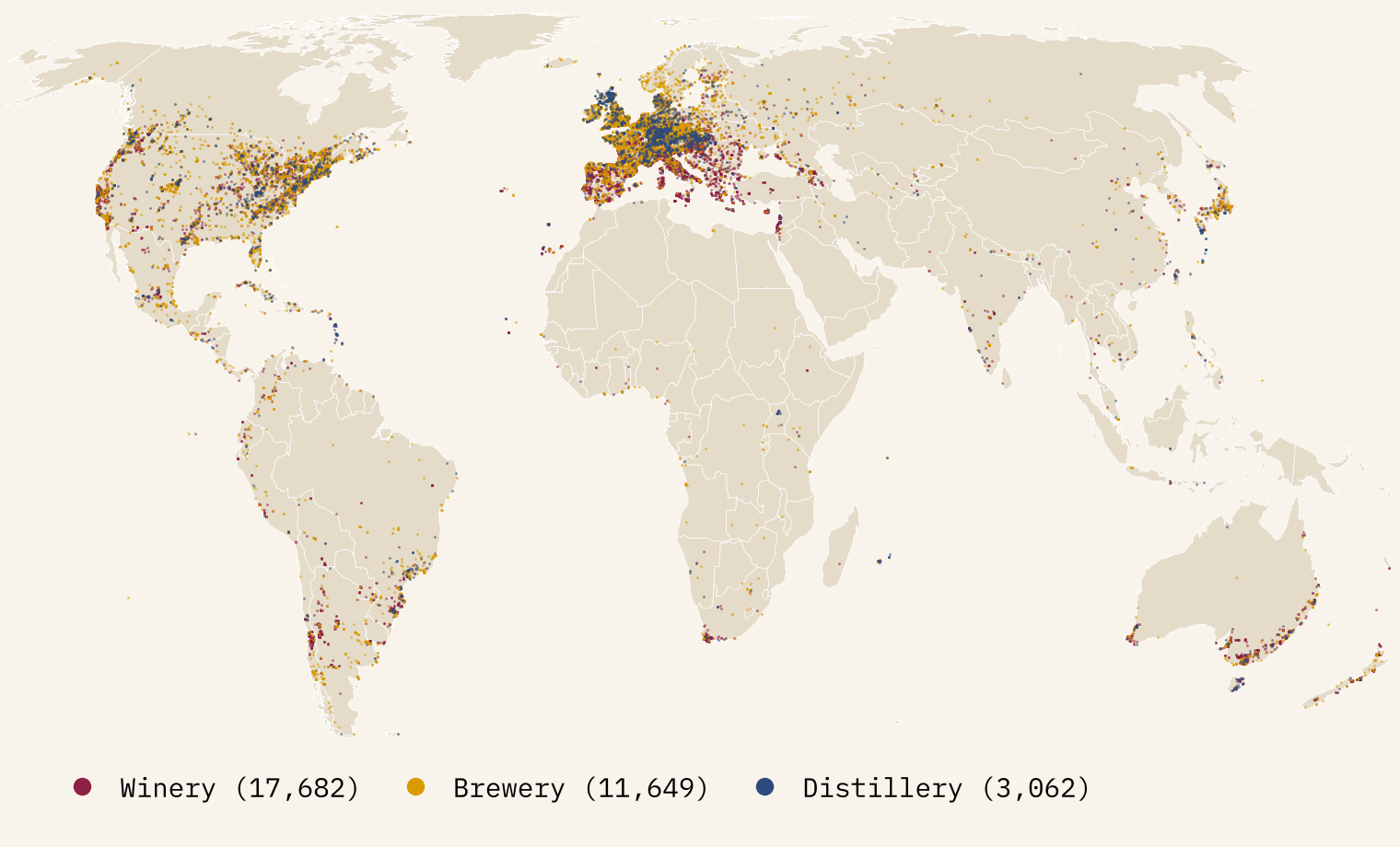
On the ground, OpenStreetMap has 17,682 wineries. France (3,198) and Germany (2,803) lead, and the busiest single region is Rhineland-Palatinate (1,980). That says something about small family estates along German rivers, and something about how keen German mappers are.
Two maps of beer
Beer is where the sources part company. Wikidata knows 20,381 named beers, almost all individual products, and 78% of them come from three countries: the United States, the Netherlands and Belgium. That is not a ranking of beer cultures. It is a ranking of who has typed beers into Wikidata: the makers with the most entries are small brewers such as Moersleutel, with 402 beers each listed one by one.
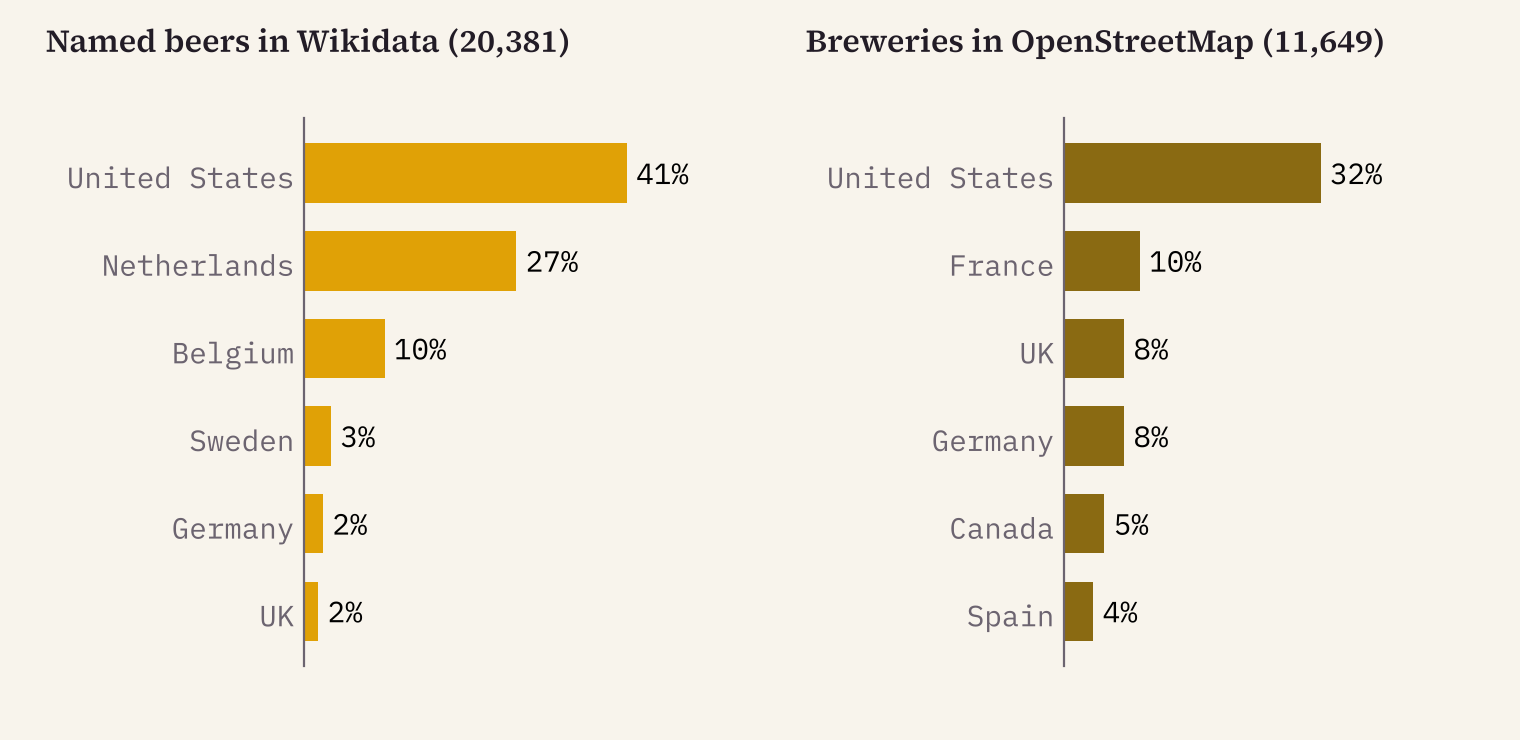
The breweries tell a broader story: 11,649 of them in OpenStreetMap, led by the United States, France, the United Kingdom and Germany, with Bavaria the busiest region (387). Protected beer names are rare, just 25, 19 of them Czech or German.
Spirits, sake and the old drinks
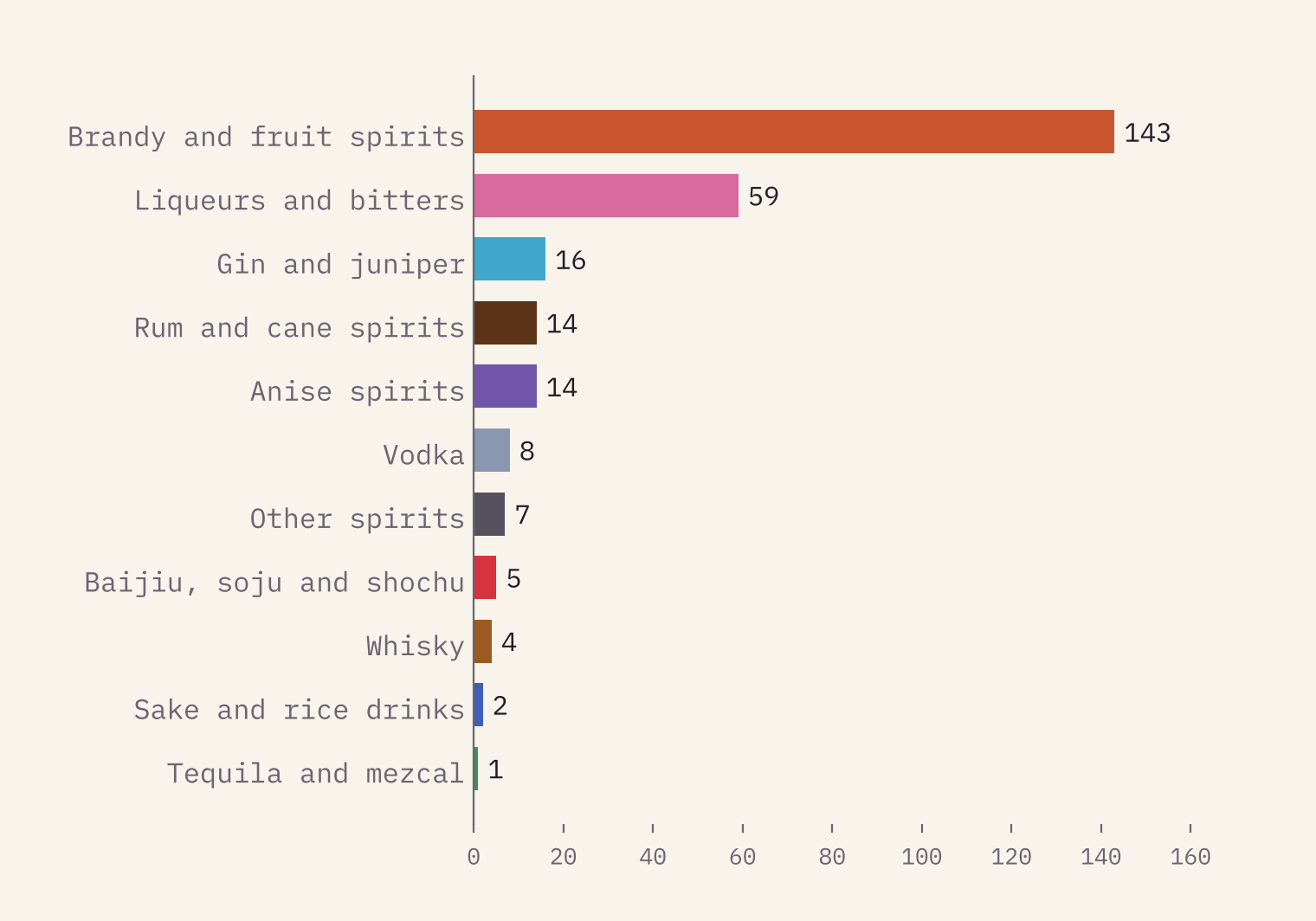
Spirits are the most varied family and the most thinly recorded. The register protects 273 spirit names, 143 of them brandies and fruit spirits: Bulgarian grozdova rakya, Hungarian pálinka, Italian grappa. OpenStreetMap has 3,062 distilleries, and the region with the most is Scotland (177).
Some of the oldest drinks leave the faintest trace. Wikidata lists 88 sake breweries, 87 of them in Japan. Cider and perry have 15 protected names, from Normandy and Asturias to Herefordshire. Kvass, pulque, chicha, tej, boza and palm wine appear in Wikidata as kinds of drink with a country, and almost never as anything more: much of what they are is made at home or sold in markets, not catalogued.
A map of who keeps the records
Put every source together and Europe holds 65% of the 67,755 records, North America 27%, and Africa 0.7%. Read naively, the map would say the Netherlands is a greater beer nation than Germany and that Africa barely drinks. Read honestly, it shows where open data about drinks is rich and where it is silent.
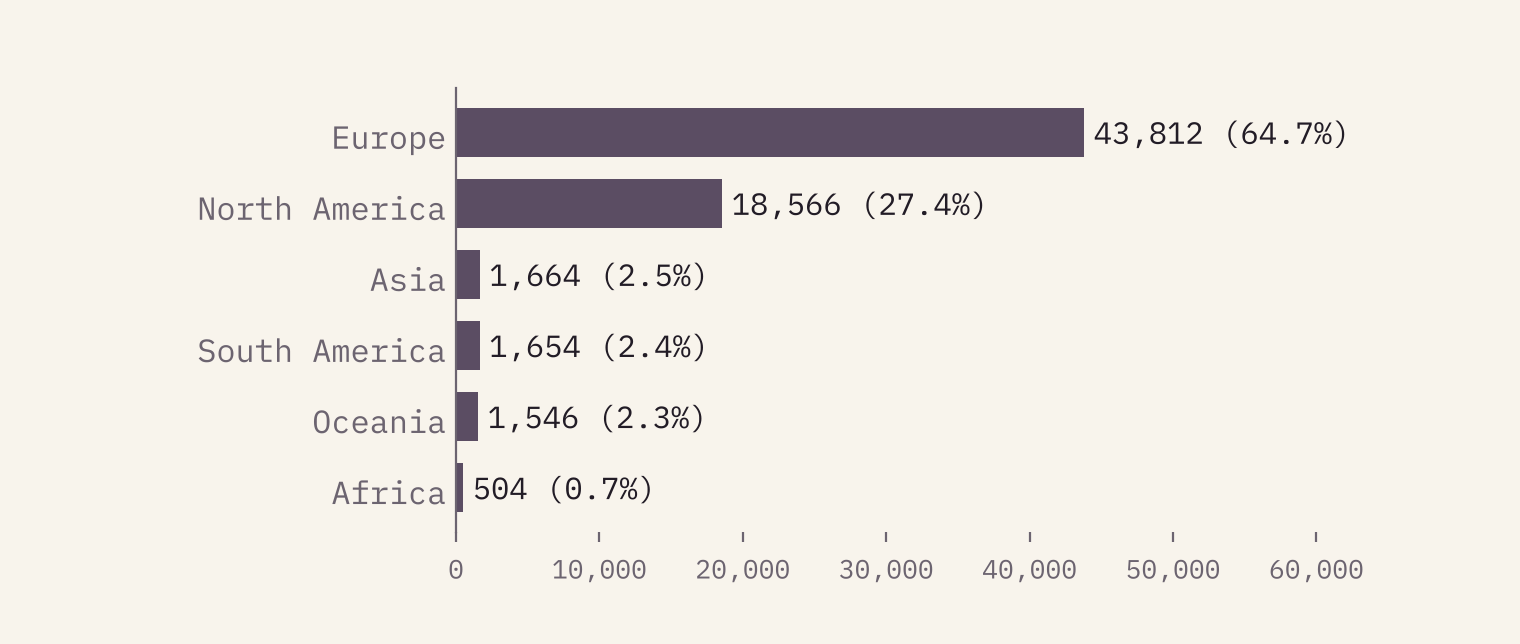
Wikidata knows 8,326 American beers by name, and Ethiopian tej only as a word.
How I did this
I fetched everything in a browser on 29 October 2026. From Wikidata I took every type of alcoholic drink and every named drink below it, plus alcohol brands and a few drinks Wikidata does not connect to the rest (rum, kvass, kumis and tuba), and gave each a family from Wikidata’s own class tree. Each drink is placed in its country of origin, and on the map at its own coordinates, its location’s or its maker’s. Cocktails are left out. Protected names come from the EU’s eAmbrosia register and are placed through Wikidata, partly by matching names, so a few dots will sit on a namesake village. Producers come from Wikidata and OpenStreetMap, and national drinks from Wikipedia’s two lists. The paper sets out every step and caveat.
This is a map of where drinks come from and what the open record says about them. It counts records, not litres, it does not rank anything, and nothing in it is a recommendation to drink. No logos are used.
The sister map of food is here: What does the world eat?
Notes and sources
- Wikidata, via QLever. CC0.
- eAmbrosia, the EU geographical indications register, public API. © European Union, reused under the Commission’s reuse policy (CC BY 4.0).
- OpenStreetMap contributors, via the Overpass API. ODbL 1.0.
- English Wikipedia, List of national drinks and List of national liquors. CC BY-SA 4.0.
- Natural Earth countries and states and provinces (public domain), and GeoNames city names (CC BY 4.0).
- I wrote the text, with drafting and editing assistance from Claude (Anthropic), which also helped prepare the analysis code. I reviewed and checked all text and results.

