
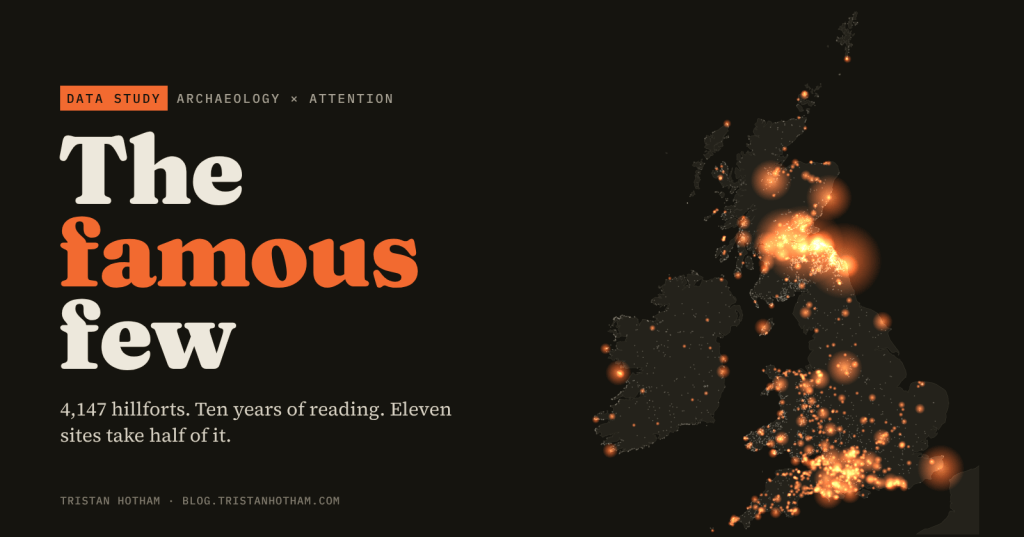
Britain and Ireland have 4,147 hillforts. A handful take almost all of the attention. I measured ten years of Wikipedia reading to find out which ones, and why.
My usual work is on attention on social media: which parties, posts and politicians get seen and which disappear. The same question works for the past. Britain and Ireland’s hillforts are a perfect test. There are thousands of them, they were built for broadly the same reasons, and the Atlas of Hillforts of Britain and Ireland has measured every one of them in the same way. So if attention followed importance, we would know what to expect.
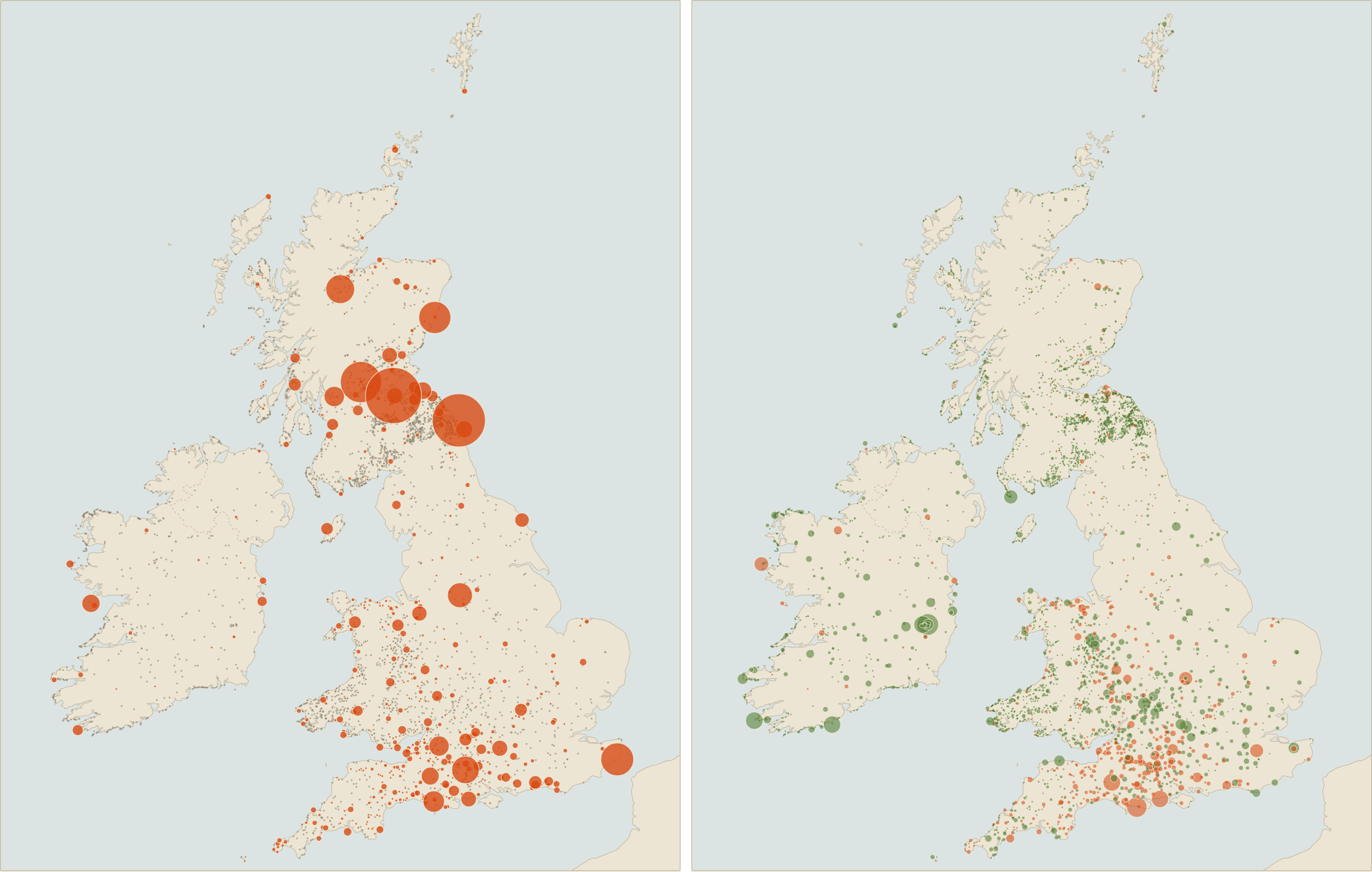
It does not. Between 2016 and 2025 the English, Welsh, Irish and Scottish Gaelic Wikipedias served about 26.5 million reads of articles about these sites. Half of that went to just eleven of them. 86% of hillforts have no English article at all.
Where the attention lands
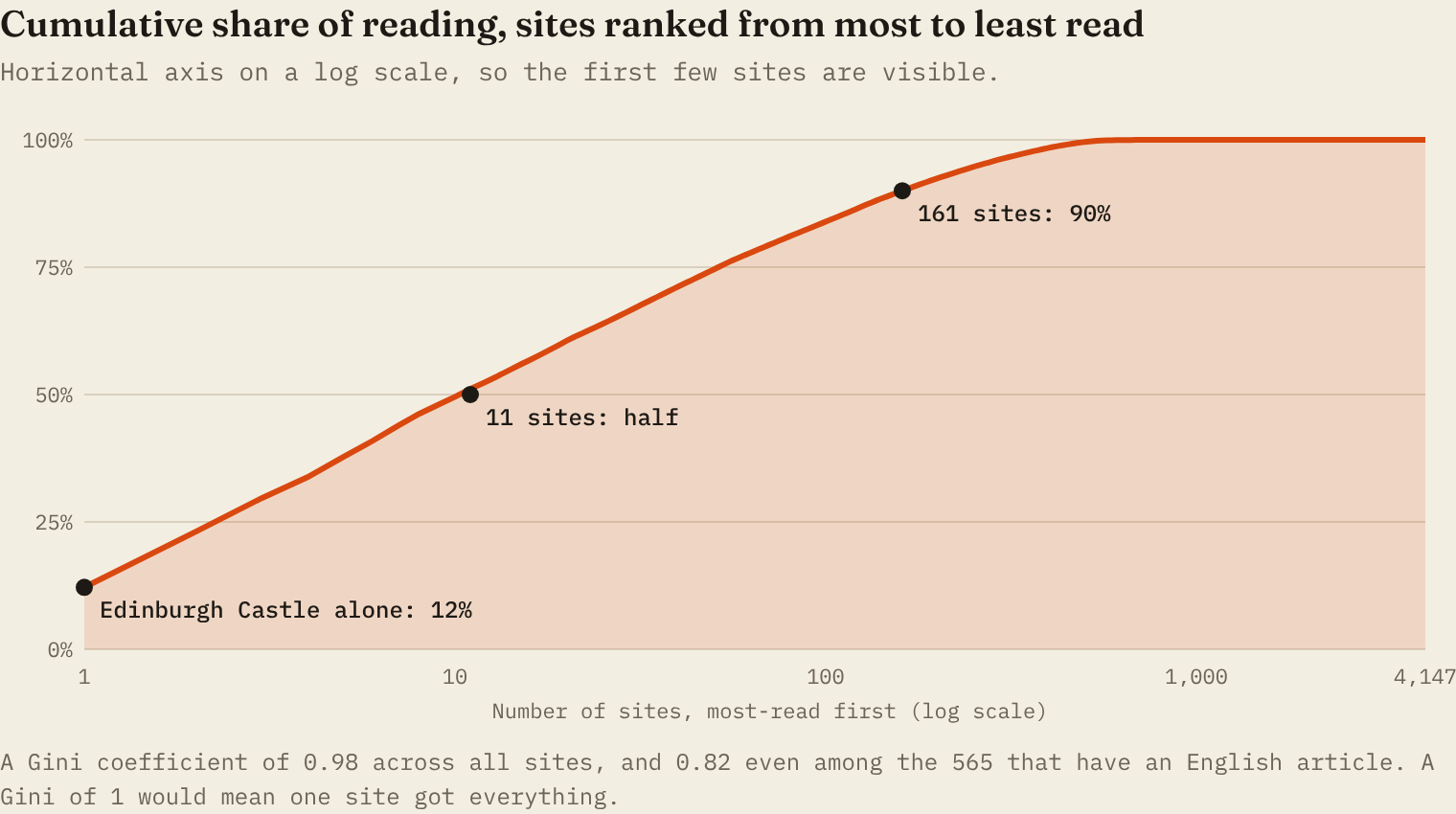
The single most-read site, Edinburgh Castle, takes 12% of all reading on its own. The top four take 34%. Eleven sites take half and 161 take nine-tenths. The Gini coefficient across all sites is 0.98, where 1 would mean one site got everything.
Bigger helps, a little
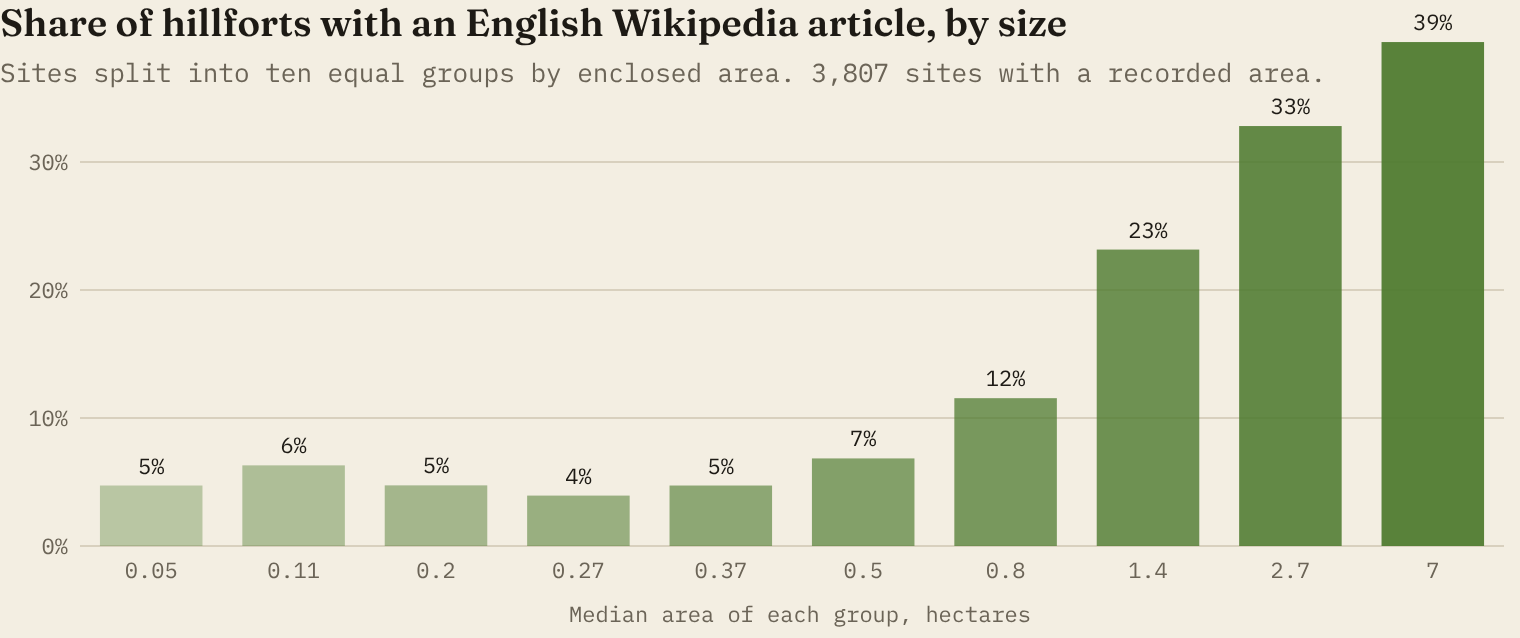
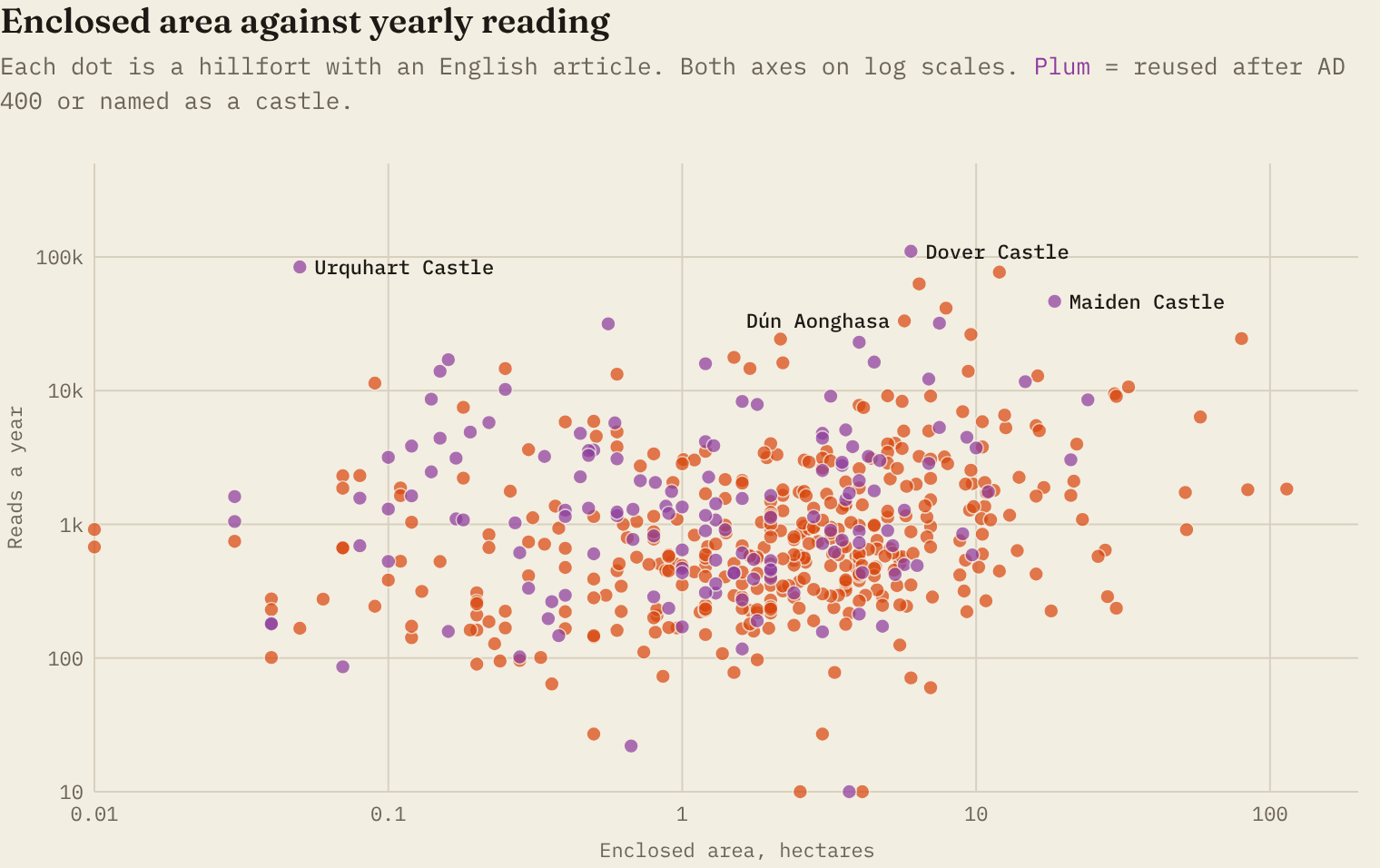
In the largest tenth of sites (4 hectares and up), 39% have an English article. In the smallest tenth it is 5%. So 61% of the biggest hillforts in these islands still have no English article. And once a site has an article, size barely predicts how many people read it.
The castle on top
The most-read “hillforts” are mostly famous for what came later. Edinburgh, Bamburgh, Stirling, Dover, Dunnottar and Urquhart are in the Atlas because an early fort lies under the castle. The 445 sites reused after AD 400 or named as castles are 11% of hillforts and take 64% of the reading.
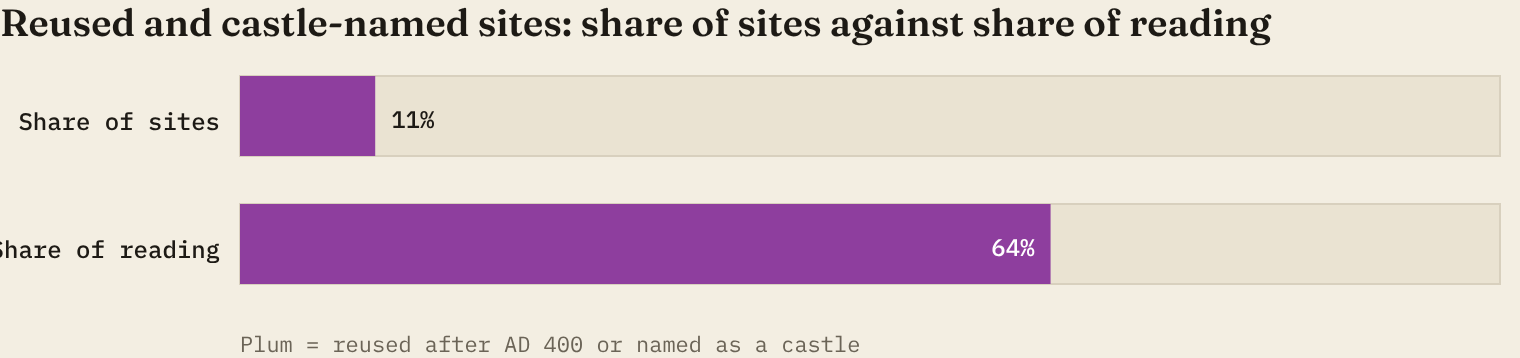
The most-read Iron Age sites are mostly read for their medieval stories.
Among the mainly prehistoric sites the leaders are a familiar list: Mam Tor in the Peak District, one of England’s best-known hill walks; Maiden Castle in Dorset; Solsbury Hill, helped by a Peter Gabriel song; Dún Aonghasa on the Aran Islands; and South Cadbury, which John Leland linked to Camelot in 1542. A good story, or a good view, beats a big rampart.
Archaeologists, then castles
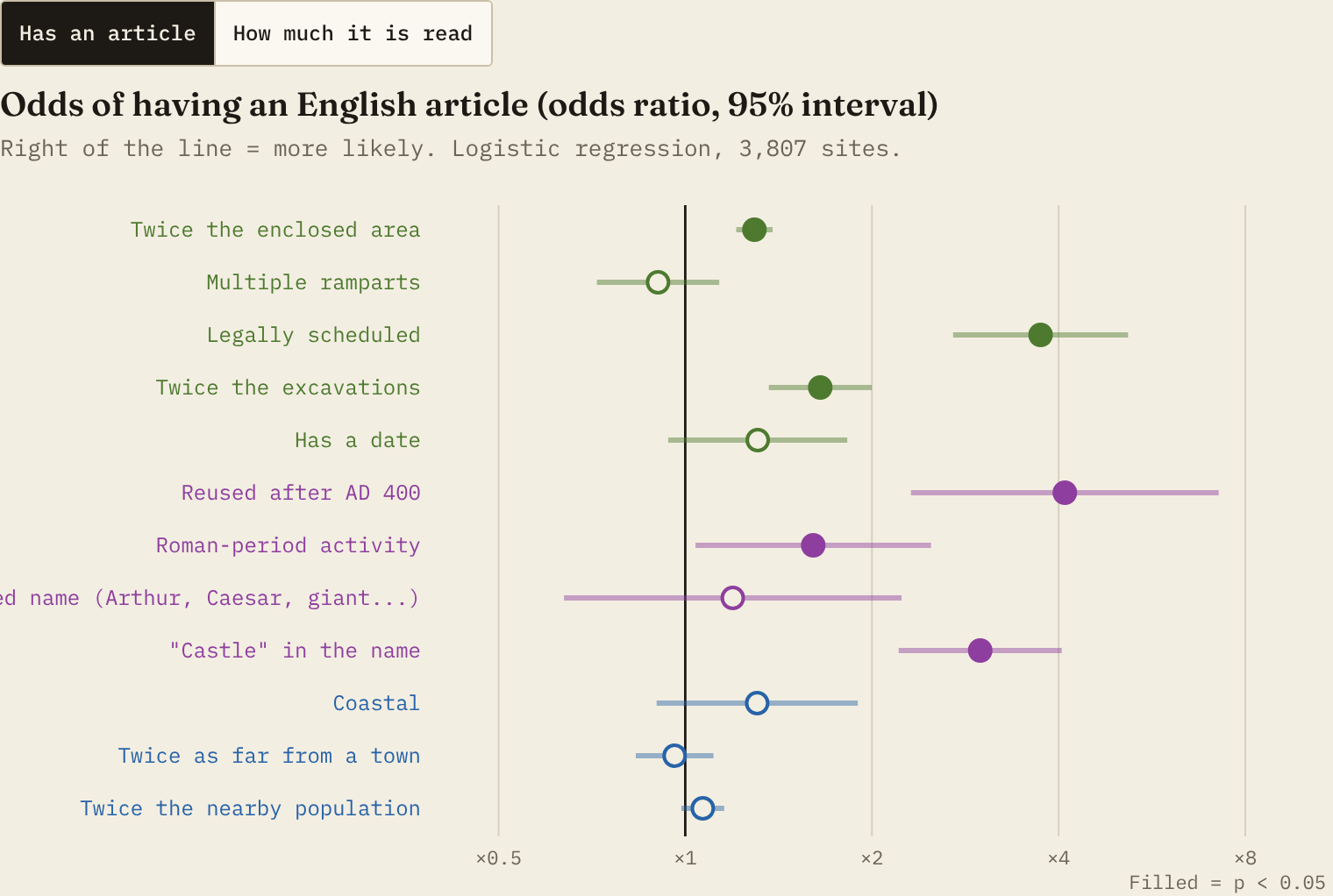
I modelled whether each site has an English article, and how much it is read, against three groups of predictors: importance (size, ramparts, legal protection, excavations, dating), fame and reuse (Roman or medieval reuse, a castle name, a storied name like Arthur or Caesar), and access (the coast, distance to a town, nearby population). Attention follows archaeological attention. Every doubling of excavations raises the odds of an article by 65% and the reading of an existing article by 58%. Scheduling nearly quadruples the odds. The castle effect survives all the controls: a castle name raises reading by 82%. Access barely matters, and Wikipedia reading is not seasonal: readers are not mostly visitors planning a walk.
Gatekeepers still decide
Attention arrives in bursts, and the biggest bursts are handed out by editors. When Cefnllys Castle in Powys was Wikipedia’s front-page featured article on Christmas Eve 2020, it got 280 times its usual monthly reading. The Trundle had the same treatment in January 2022. News does it too: Tap o’ Noth when it was announced as the largest Pictish settlement ever found, and Stanwick when the Melsonby hoard was announced in March 2025.
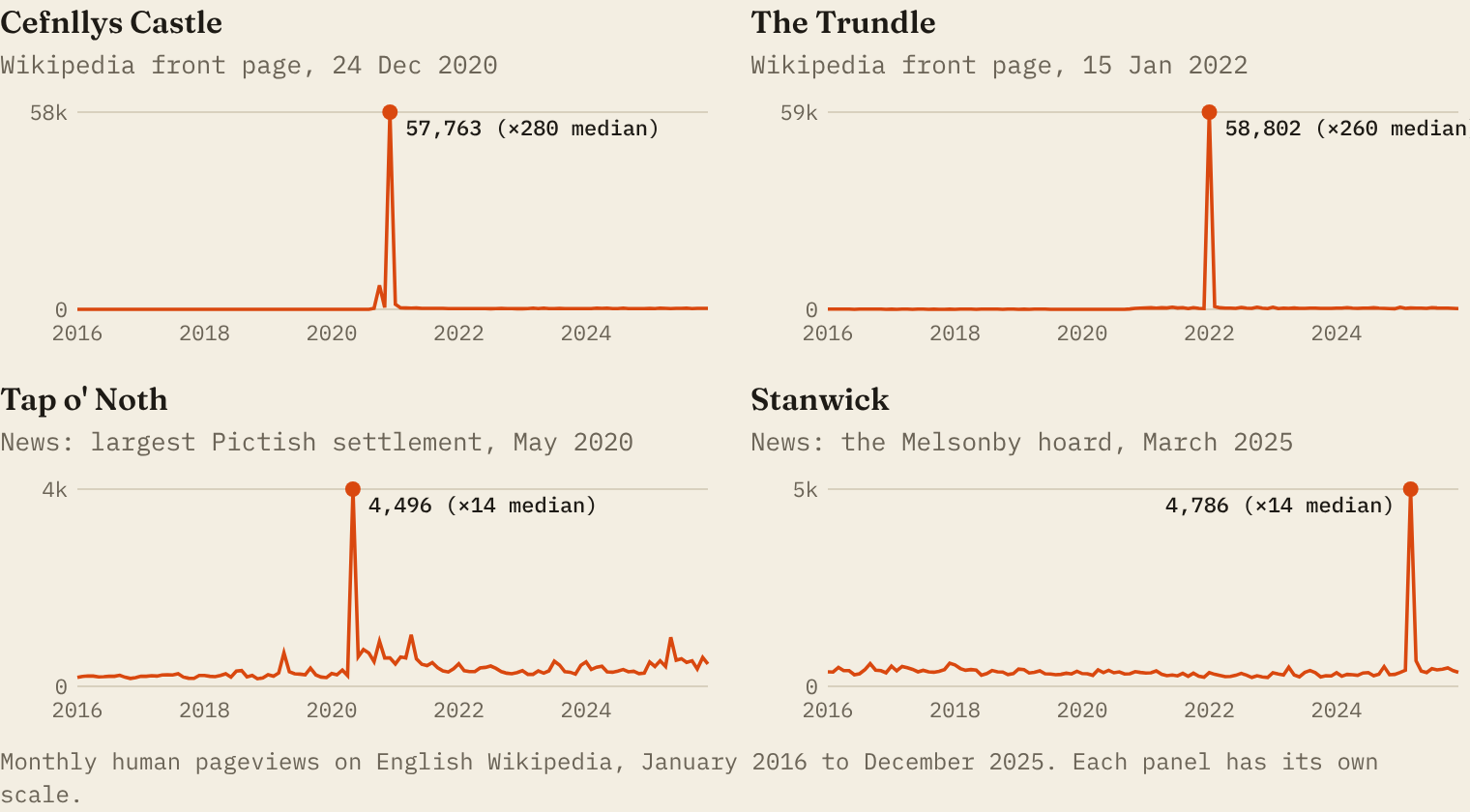
It is the same pattern I find on Facebook: a long, quiet tail, and a few moments when an algorithm or an editor points everyone at the same thing.
Wales writes its own
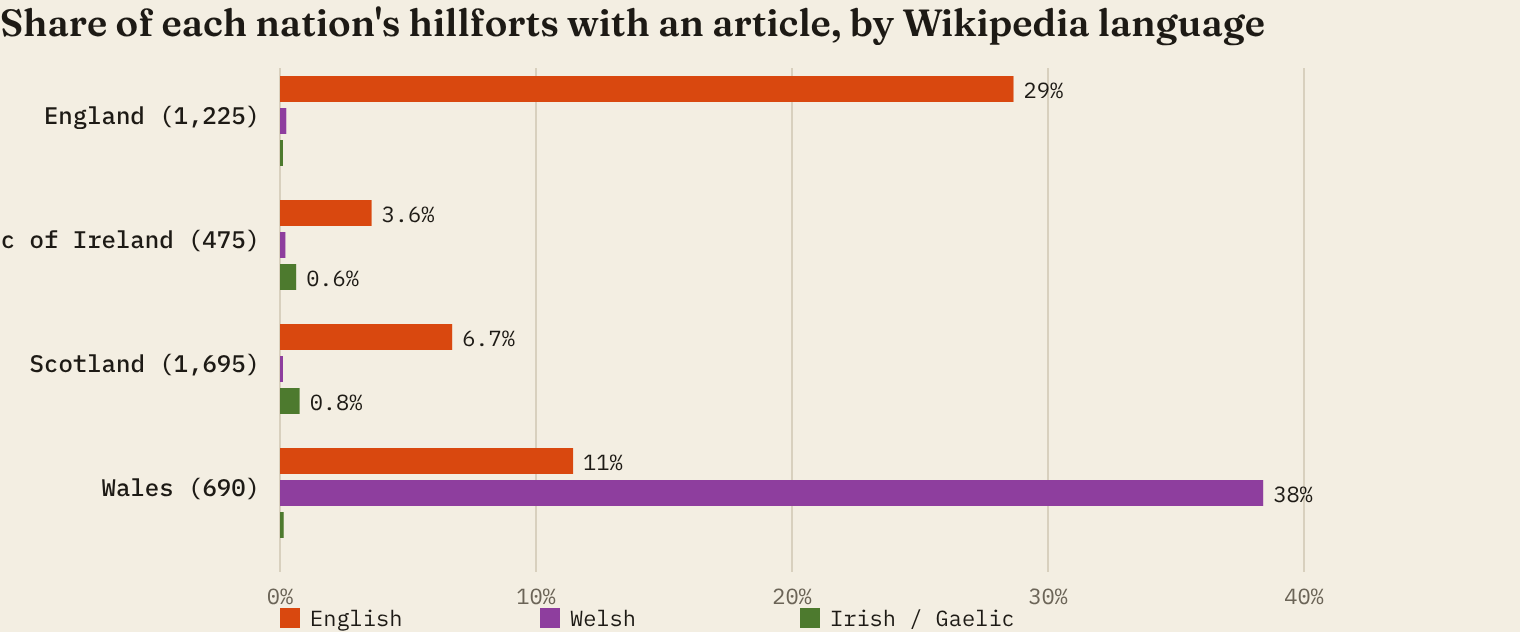
English Wikipedia covers 29% of England’s hillforts, 11% of Wales’s, 7% of Scotland’s and only 3.6% of those in the Republic of Ireland. But Welsh Wikipedia has its own articles on 38% of Welsh hillforts. In Wales, a hillfort is more likely to be written about in Welsh than in English.
The forgotten giants
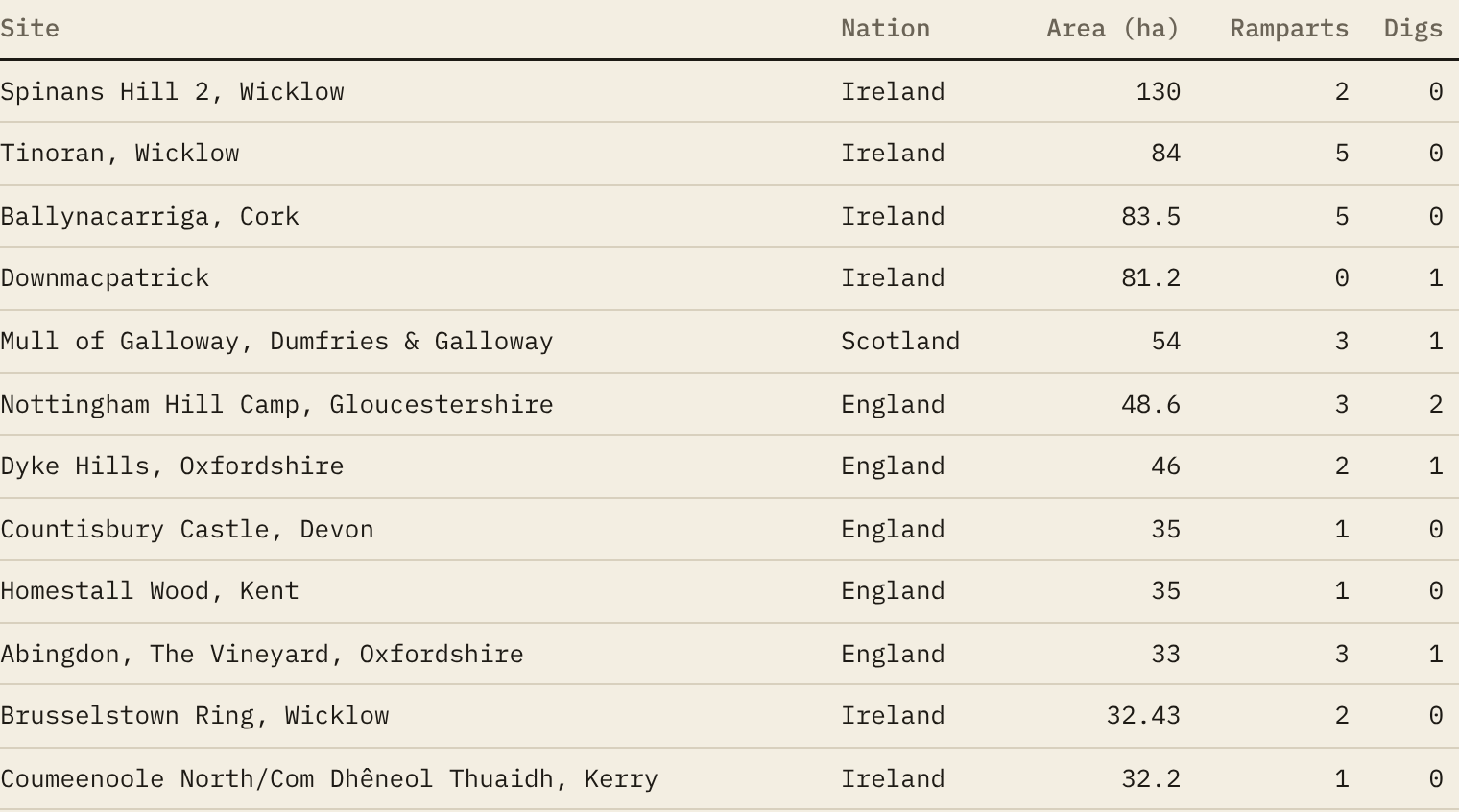
The largest hillforts with no article in any of the four languages are half in Ireland, including the four largest, led by Spinans Hill in County Wicklow at 130 hectares, part of the Baltinglass hillfort complex. Some very large sites, such as Ham Hill and Hengistbury Head, do have articles, filed under the hill or the headland rather than the fort.
How I did this
All 4,147 hillforts come from the Atlas of Hillforts of Britain and Ireland (Lock and Ralston 2017, CC BY-SA 4.0), via the copy of the source data released with Mike Middleton’s Hillforts Primer. I linked each site to its Wikidata item and to English, Welsh, Irish and Scottish Gaelic articles, then matched further articles filed under castles, hills and headlands by location and name. Reading is human pageviews from the Wikimedia API, 2016 to 2025.
I planned to add Google Maps review counts as a second attention measure. Google’s terms do not allow reviews or place data to be scraped or stored for analysis, so I left them out. I also planned to count car parks near each site from OpenStreetMap, but the public query servers were unavailable while I collected the data, so access is measured by distance to towns and nearby population instead.
Notes and sources
- Site data: Lock, G. and Ralston, I. 2017, Atlas of Hillforts of Britain and Ireland (CC BY-SA 4.0), via Mike Middleton’s Hillforts Primer.
- Reading: Wikimedia pageviews API, human users, January 2016 to December 2025. Articles linked through Wikidata property P4102.
- Front-page features: talk pages of Cefnllys Castle and The Trundle.
- News: Tap o’ Noth, May 2020; the Melsonby hoard.
- Paper, data and code: Zenodo and GitHub.

